Basketball Cards
1930s
Click on images to enlarge
Images are all from the Retro Baloncesto collection and are ascending by year. The rarity scale (for cards) is based on graded POP reports, online exemplars, past listings, available sales history and is subject to change.
Including postcards, trade cards, stamps, flannels, felts & silks


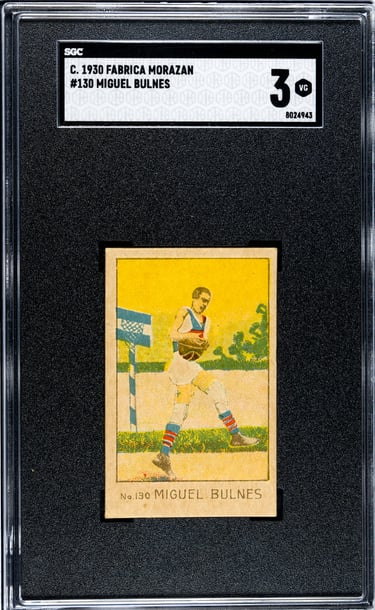
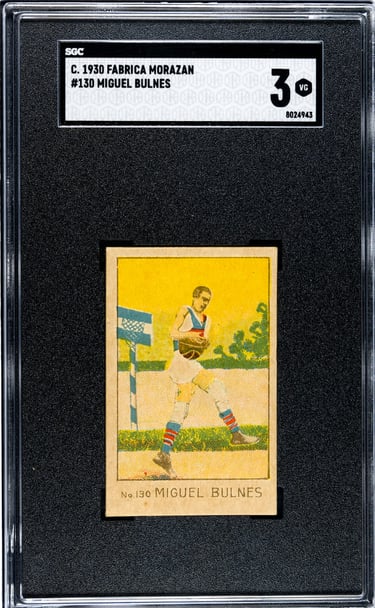
FABRICA MORAZÁN TOBACCO BASKETBALL CARDS (EL SALVADOR)
There isn’t much information on these beautiful lithograph Fabrica Morazán Tobacco cards from San Salvador. They were from an inherited collection of South American cards that were initially bought when their grandfather was stationed in South America for the military. There seems to be a couple different variations, including white bordered cards, likely released at different times. From a couple auction examples and some being graded with SGC, the set seems to feature a variety of sports, most notably a card featuring Babe Ruth (throwing a rugby ball oddly enough). It is unknown how many basketball cards are in the set, but I have seen one other not shown here. Online examples have listed the cards as issued in the 1920s or 1930s, SGC has documented them as circa 1930.
Measurements: 1.5” x 2.375”


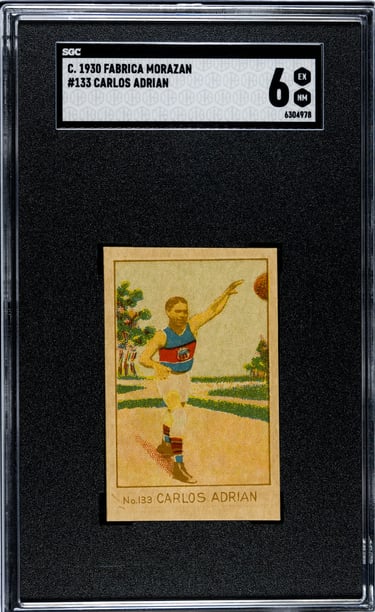
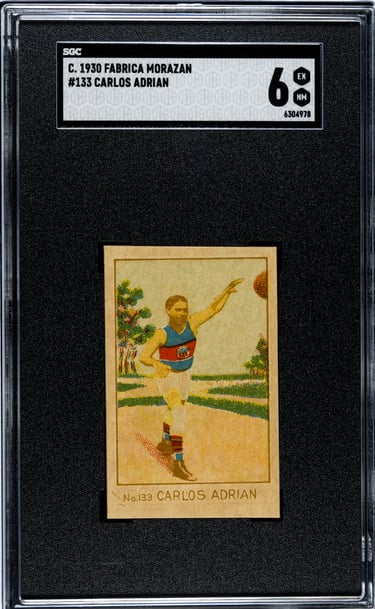
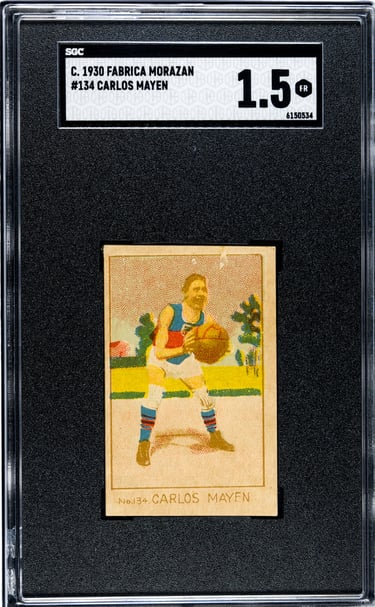
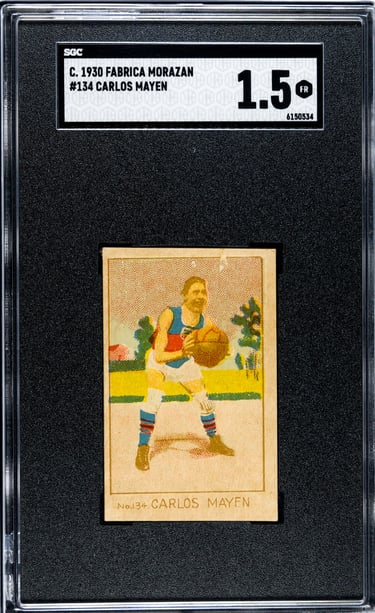
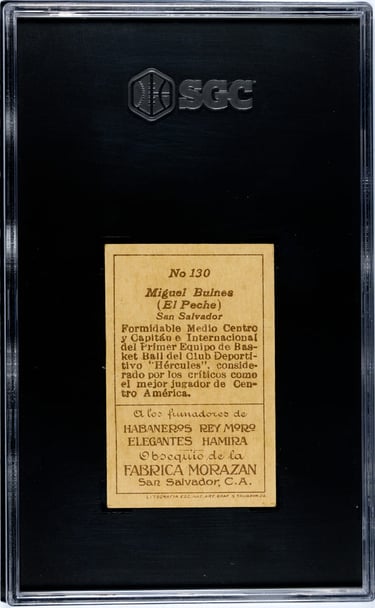
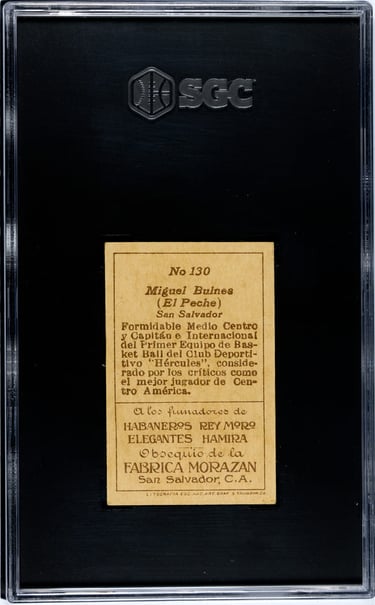
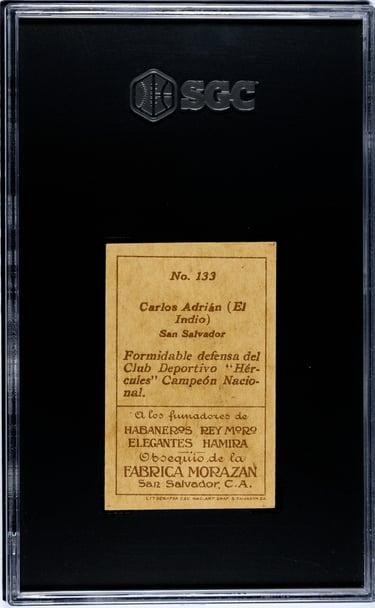
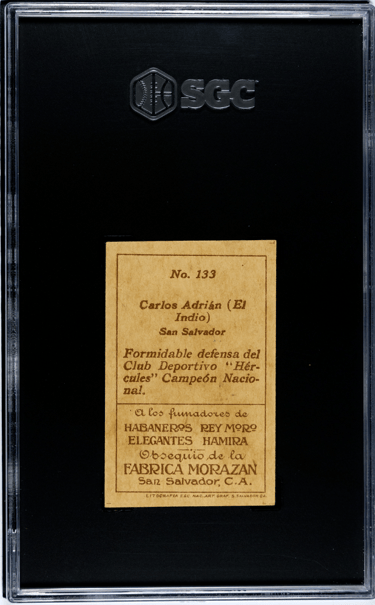
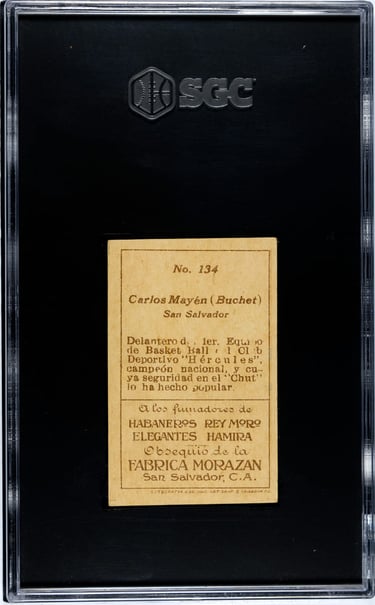
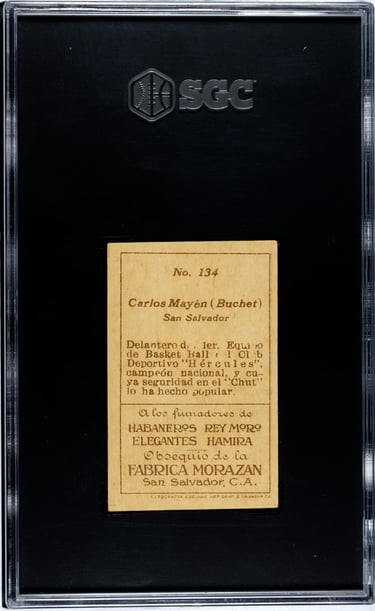
circa 1930
COSMOS, EL HOMBRE, Y EL MUNDO EN QUE VIVE, NO. 127 BASKET-BALL (URUGUAY)
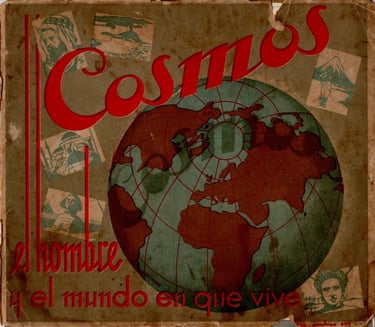
The Cosmos El Hombre Y El Mundo En Que Vive (Man and the world in which he lives) was released by the candy and sweets company, Jacobo Sisler, around 1930 in Uruguay. The cards were given away as inserts in various chocolatines and carmelos packages and were meant to be glued into the accompanying Cosmos album. There were 278 cards in the set, including over a dozen sports cards, with No. 127 being the only basketball card. The album included text for the basketball card that mentioned the invention of the game by Mr. Naismith and a description of the game.
Measurements: 1.25" x 2.75"


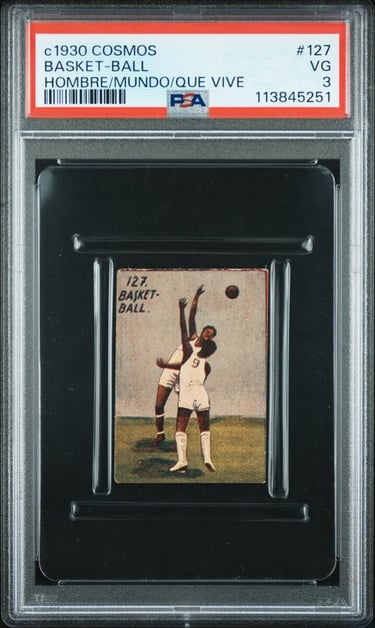
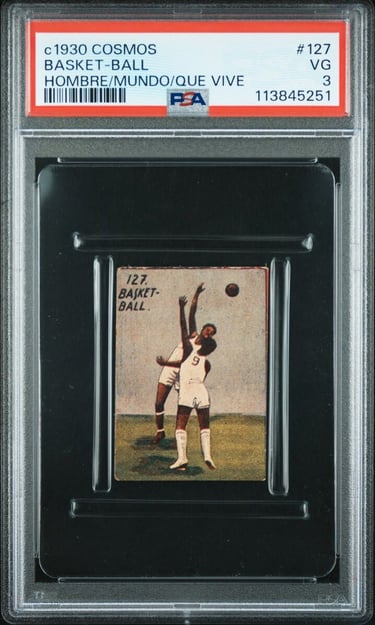
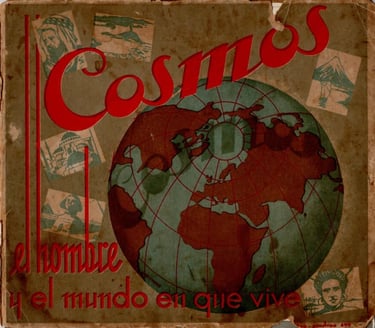
circa 1930
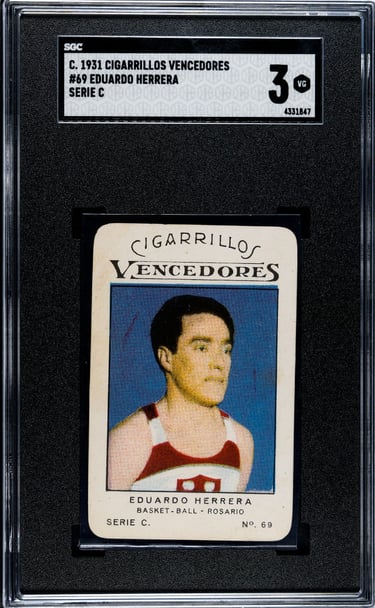
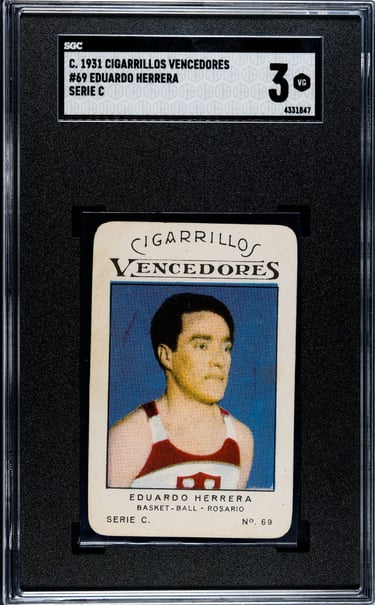
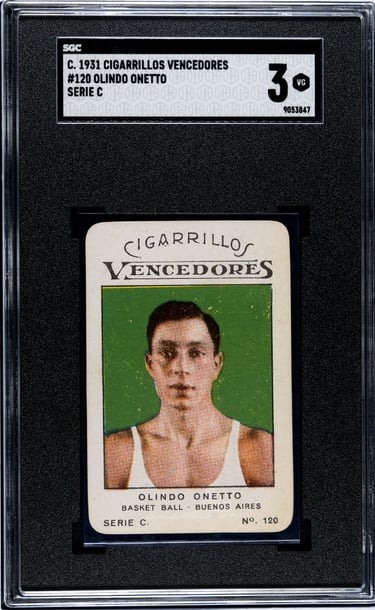
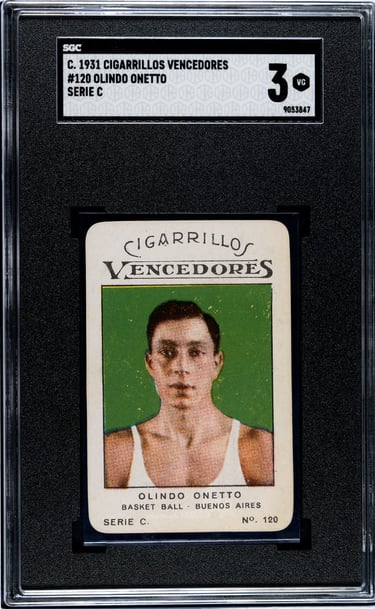
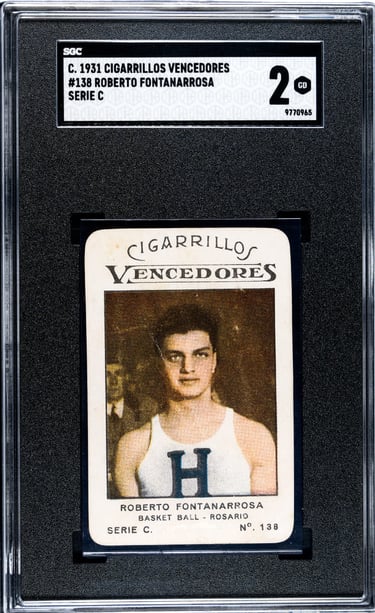
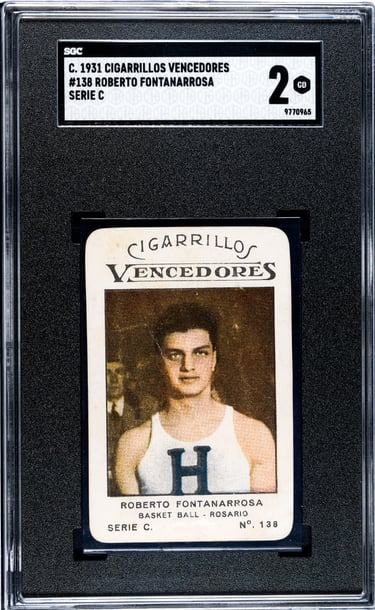
CIGARRILLOS VENCEDORES SERIE C BASKET BALL CARDS (ARGENTINA)
I cannot find much information on these extremely rare Argentinian cards but I had the pleasure to look through a collection that consisted of the majority of the set, although the number of basketball cards (or total cards) is unknown. It's made up of individual athletes from a variety of different sports, most featuring these bold and colorful backgrounds.
Measurements: 1.875" x 2.75"
1931
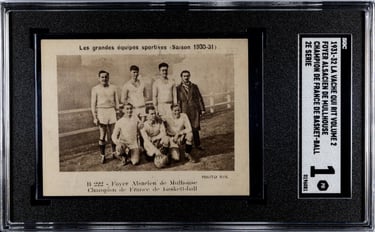
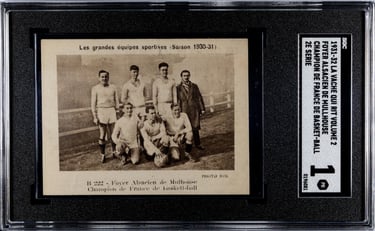
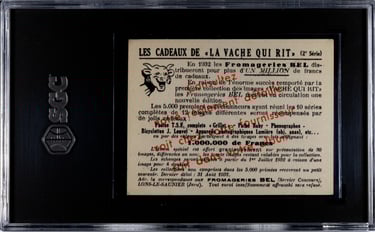
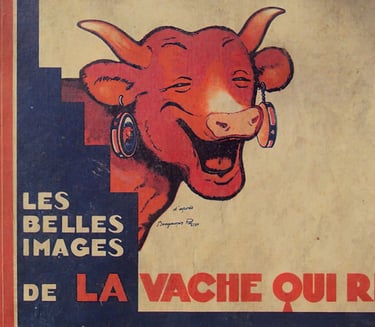
LA VACHE QUI RIT, 2nd SERIE, B222 - FOYER ALSACIEN DE MULLHOUSE CHAMPION DE FRANCE DE BASKET-BALL (FRANCE)
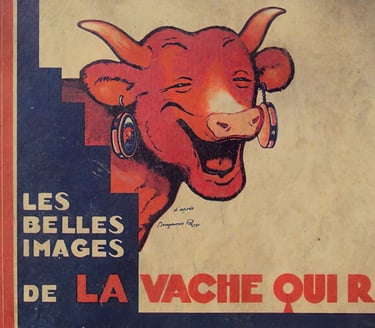
This card was manufactured by Fromageries Bel in France and released by La Vache Qui Rit (The Laughing Cow) cheese company. I have seen examples with and without the red lettering stamp on the reverse. There were 2 series released of these cards, 12 cards per subset, 10 subsets, for a total of 240 cards. This is the only Basketball card in the entire set, part of the Les Grandes Equipes Sportives subset.
Measurements: 2.25" x 3"
1931-1932
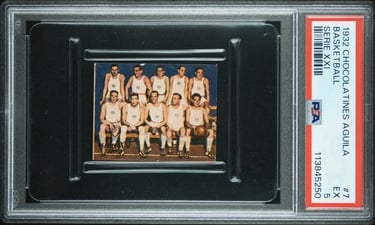
CHOCOLATINES AGUILA SERIE XXI #7 BASKETBALL (URUGUAY)
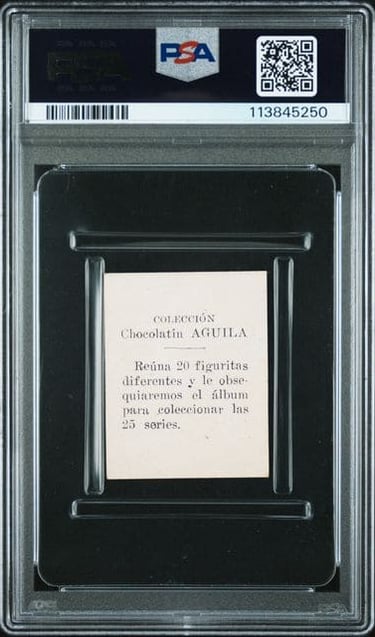
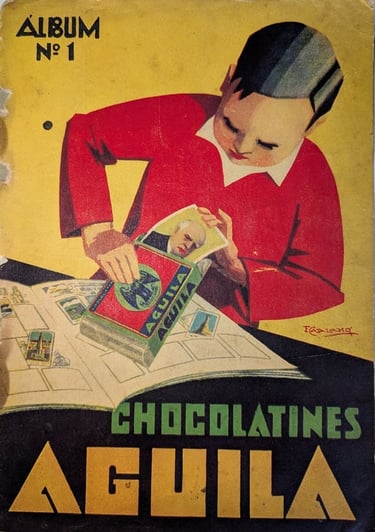
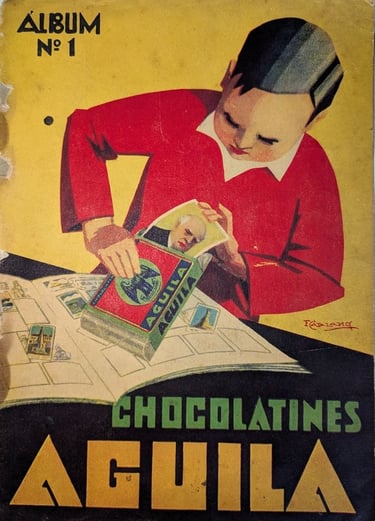
Chocolate Aguila produced stickers and albums on all sorts of subjects in 1932. One set of stickers was Campones of Deportes and it included one basketball card (pictured here). The majority of the set consisted of the more popular football at the time. These cards were meant to be adhered to a accompanying album, so they are hard to find without adhesive/residue on the back.
Measurements: 1.325" x 1.875"


1932
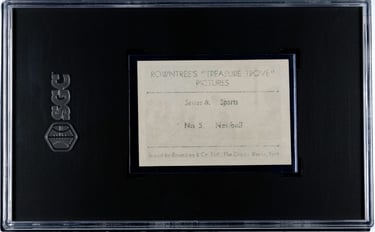
ROWNTREE'S TREASURE TROVE, SERIES 8, NO. 5, NET-BALL (U.K.)
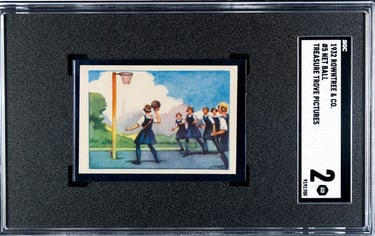
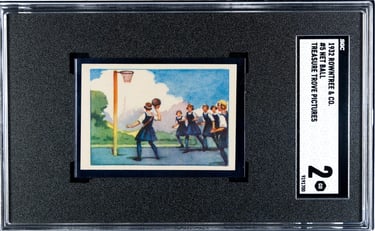
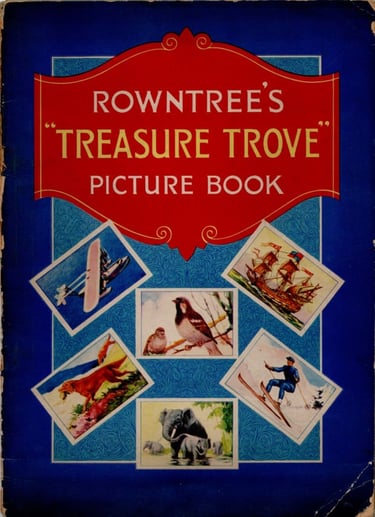
Rowntree & Co. LTD was a candy company based in York, England that created some very notable candy in the 1930s, including Kit Kat and Smarties. They were eventually bought out by Nestle. These cards were released in 1932 inside every penny bar of Rowntree's chocolate and were meant to be glued into the accompanying Treasure Trove Picture Book. There were 10 series released, with 12 cards per series, for a total of 120 cards. Series 8 was the Sports series and contained this one card featuring Net-ball, the other cards featured a variety of different popular sports at the time.
Measurements: 2.25" x 1.0625"
1932
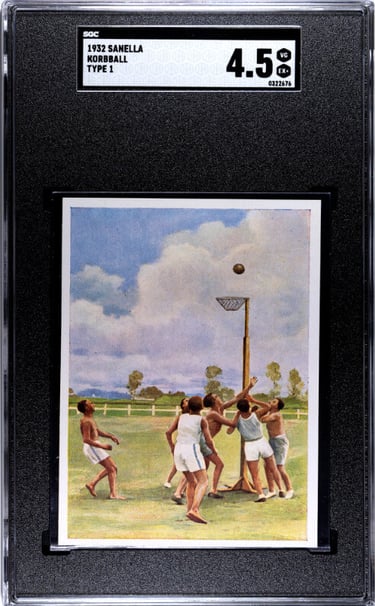
SANELLA MARGARINE KORBBALL (NETBALL) #54 TYPE 1 & 3 (GERMANY)
The Sanella "Handbuch des Sports" was a multi-sport card set that consisted of 112 cards. The cards were published with 3 different types, the only difference being the layout on the back of the cards. Type 2 is rather common and the most seen variation. Type 1 is more scarce and Type 3 is the rarest version. The rarity scale is adjusted towards the Type 1 & 2 variations.
Astra margarine also released this card in 3 types (not pictured) in 1932 and is much rarer than the Sanella releases.
Measurements: 2.75" x 4"


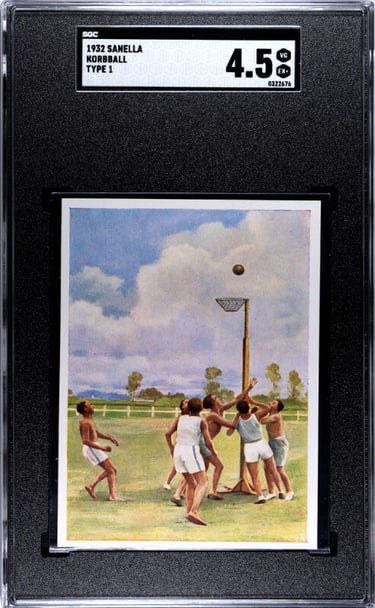


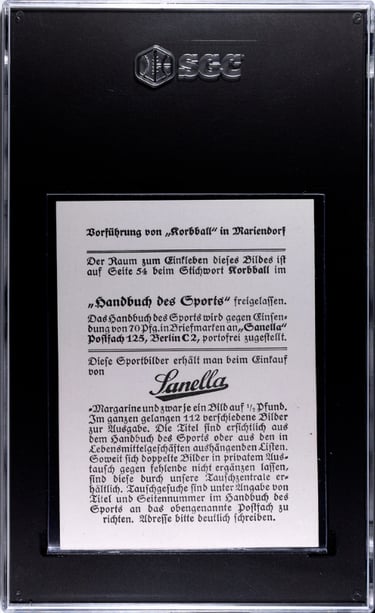
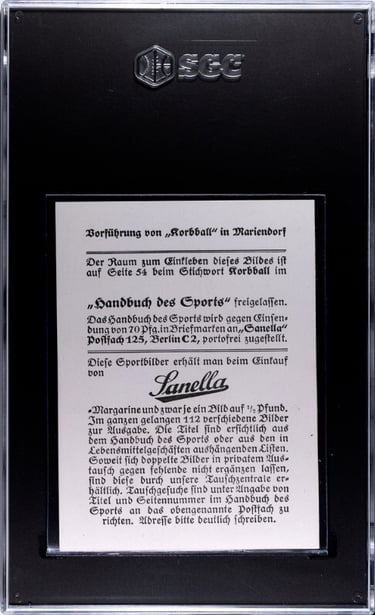
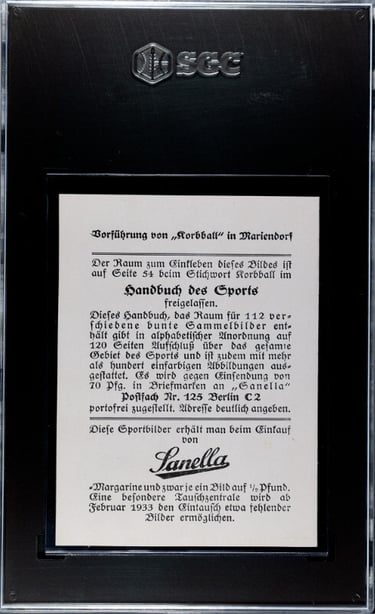
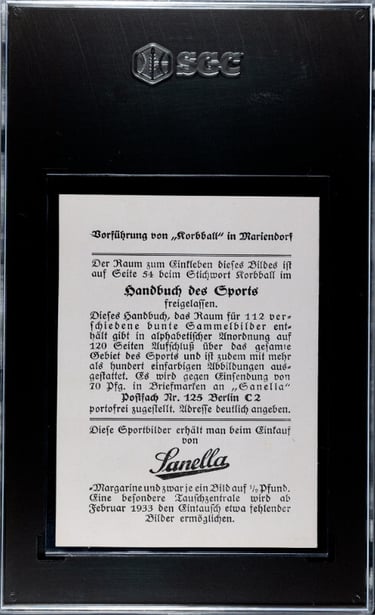
1932
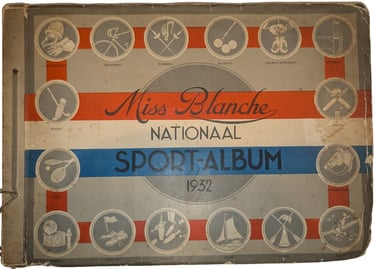
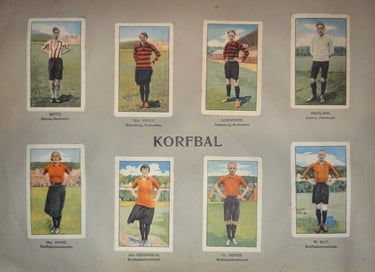
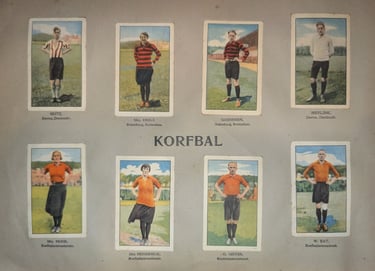
VITTORIA EGYPTIAN CIGARETTES MISS BLANCHE NATIONALE SPORTSERIE KORFBAL CARDS (NETHERLANDS)
The Vittoria Egyptian Cigarette Company of Rotterdam issued this set of 200 sports cards to be included in the Miss Blanche Nationaal Sport Album. The set featured various popular sports of the region, including 8 Korfbal cards. Korfball was created in the Netherlands in 1902 and has many similarities to basketball as it was loosely based on the American rules of American women's basketball from the late 19th century. It is a mixed-gender sport, with each team composed with four female players and four male players.
Measurements: 1.5625" x 2.5"
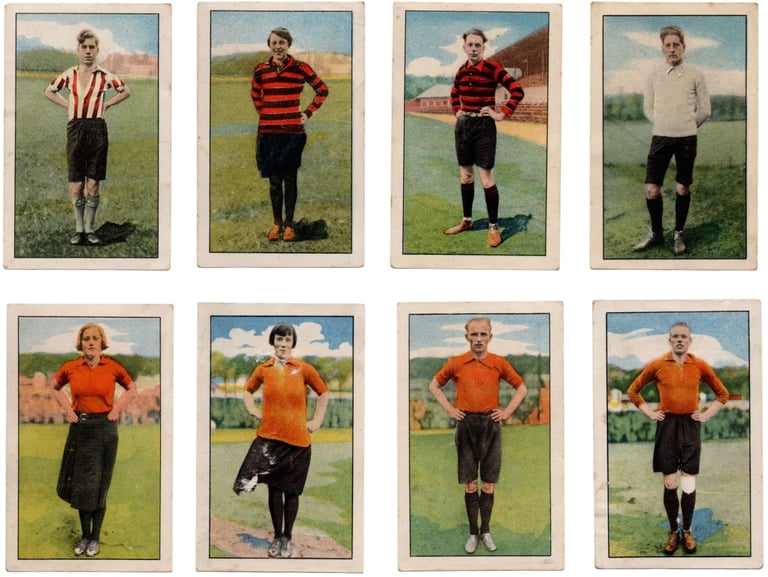
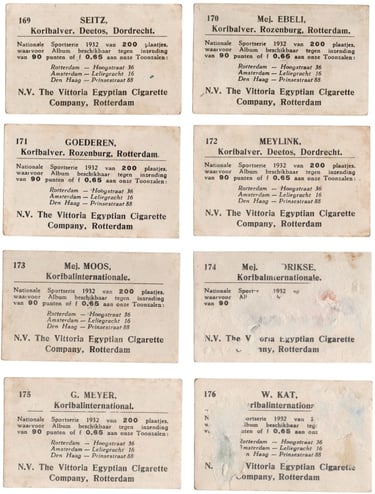
1932
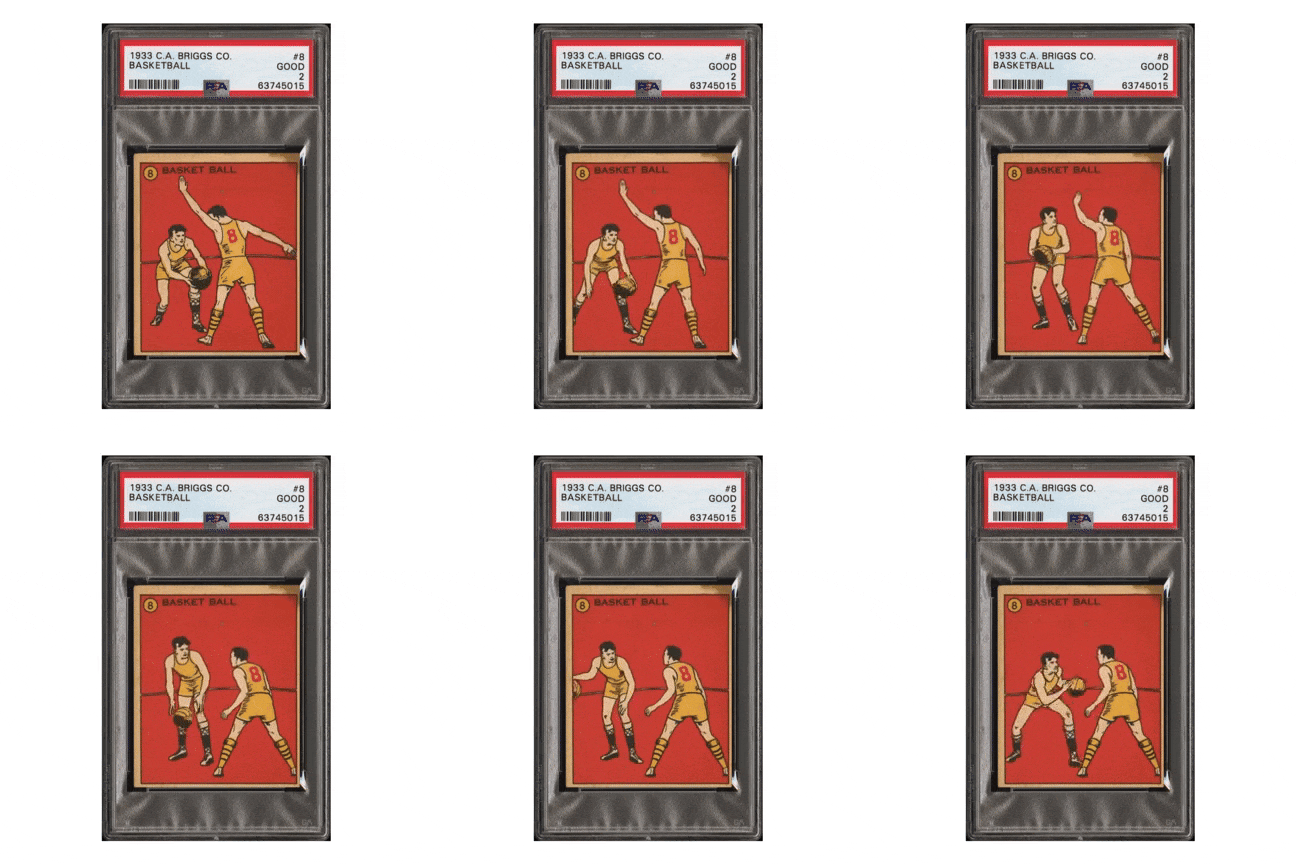
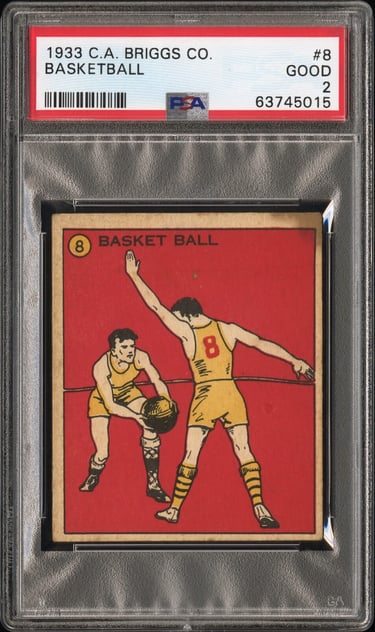
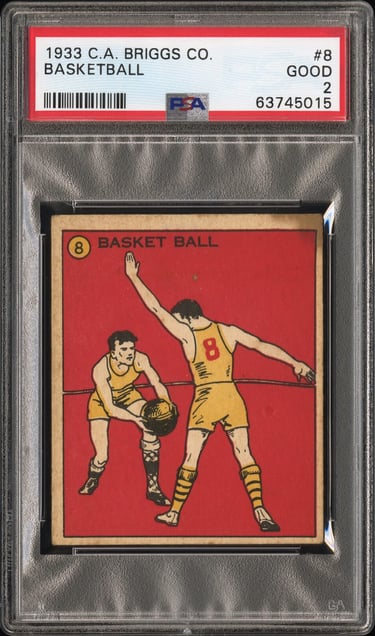
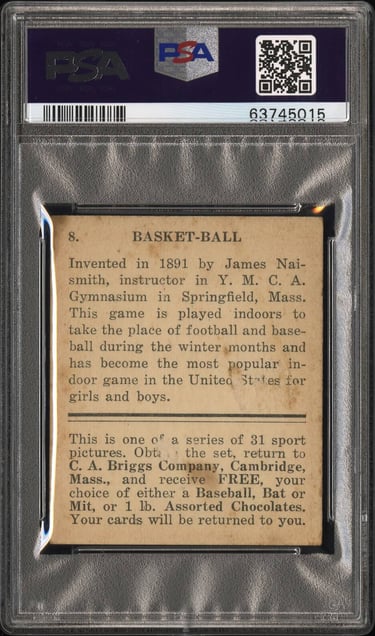
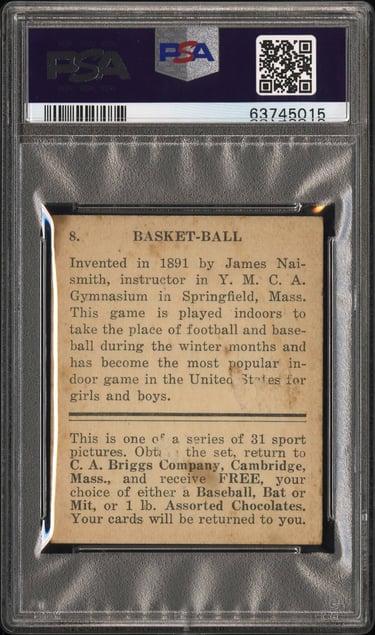
C.A. BRIGGS CHOCOLATE #8 BASKET BALL (U.S.A.)
The C.A. Briggs card pictured here is the favorite and likely most rare of the collection. I know of only one other copy. There were 31 sports cards in this set and this is the sole basketball card. The cards were released in Massachusetts and could be collected and redeemed for prizes.
Measurements: 2.25" 2.75"



1933
GOUDEY SPORT KINGS GUM BASKETBALL CARDS (U.S.A.)
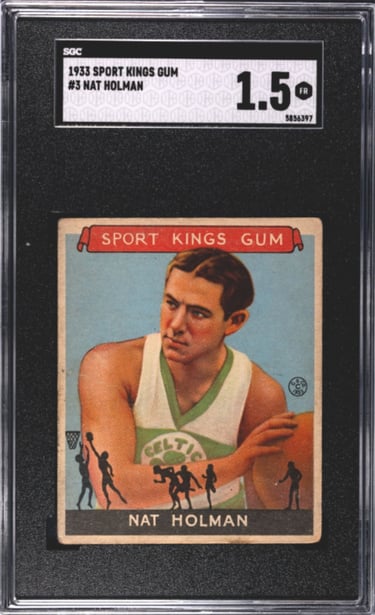


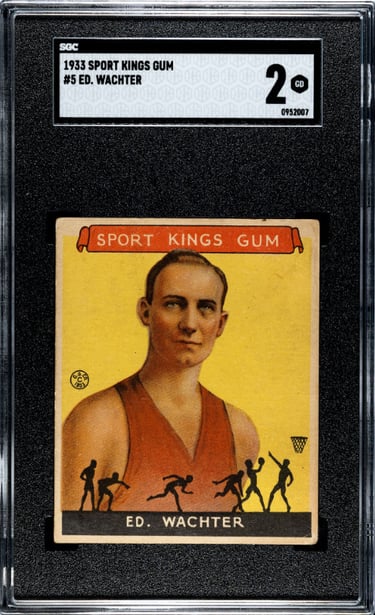
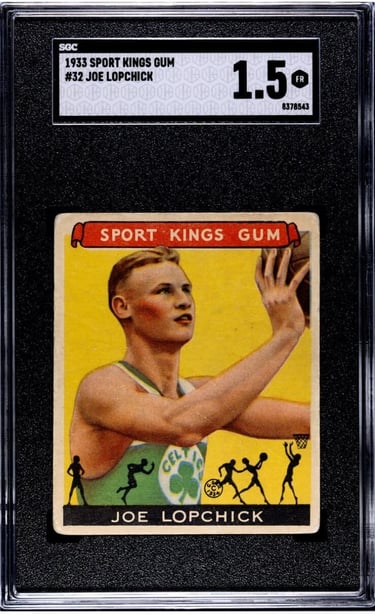
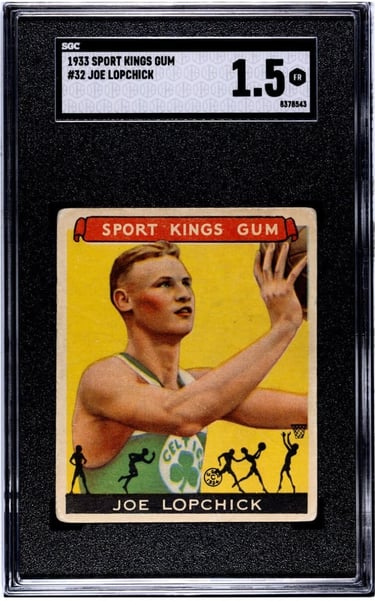
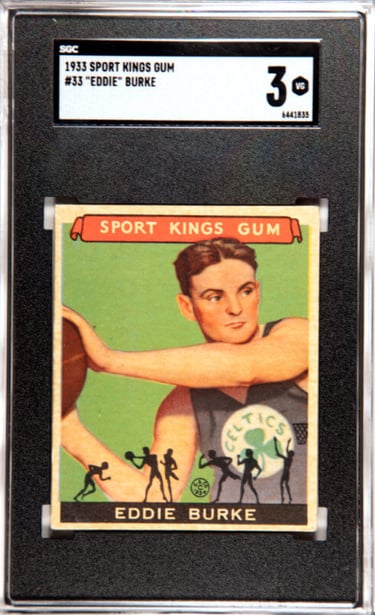
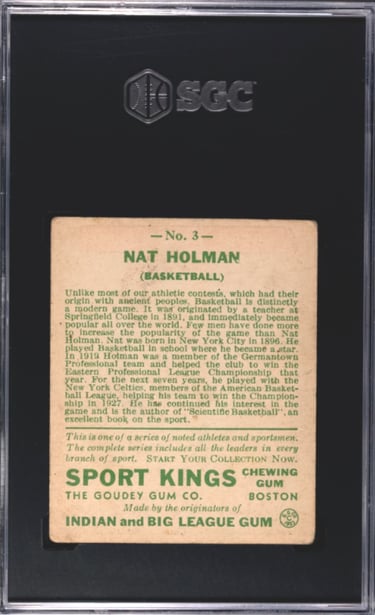
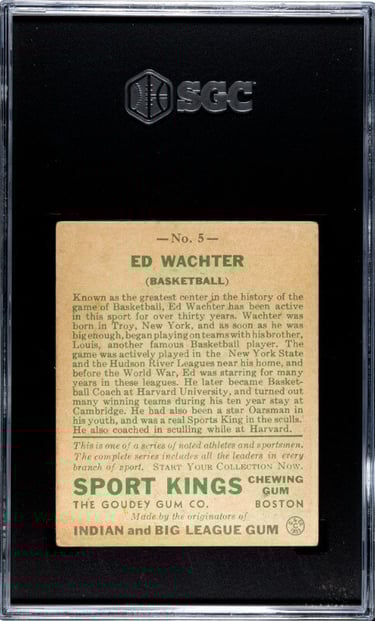
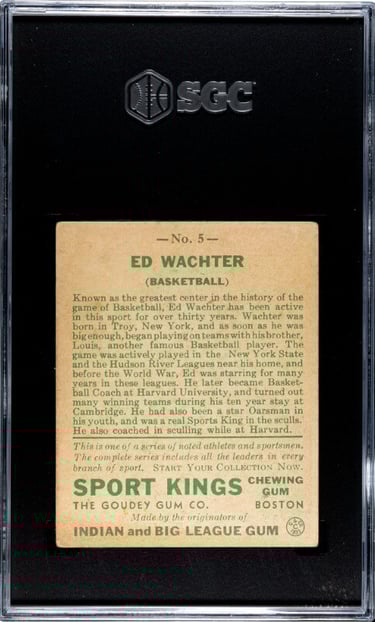
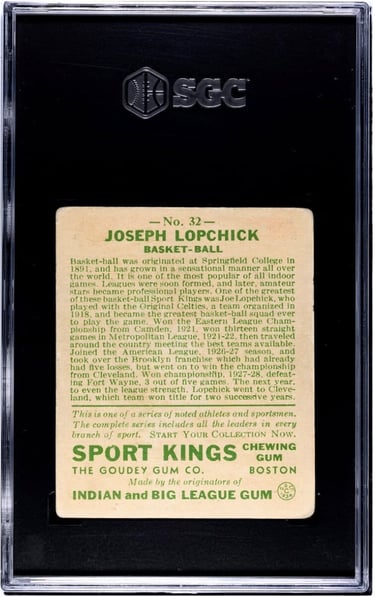
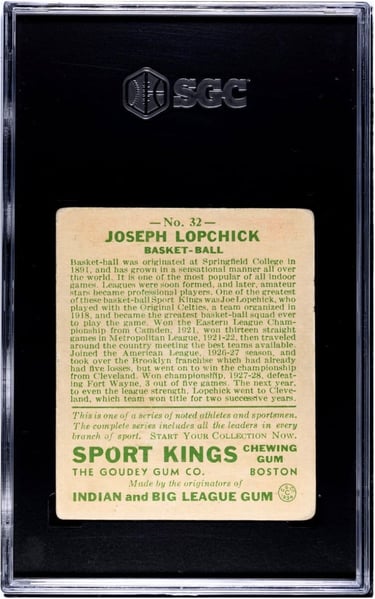
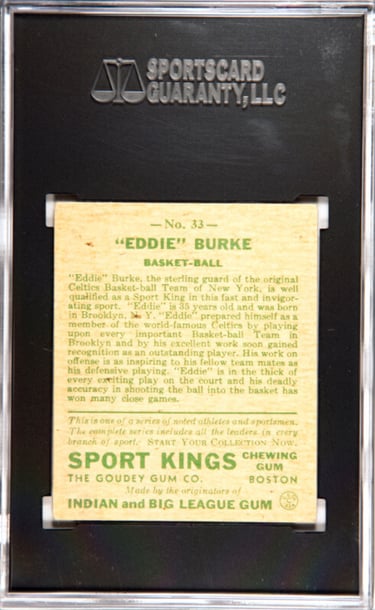
The Sport Kings Gum card set featured a variety of sports and consisted of 48 cards, 4 of which were basketball: #3 Nat Holman, #5 Ed Wachter, #32 Joe Lapchick (misspelled Lopchick on the card) & #33 Eddie Burke. These were the first U.S. basketball cards to feature professional American athletes. The cards aren't too difficult to find but can command high prices, especially in higher grades. Measurements: 2.375" x 2.875"
1933
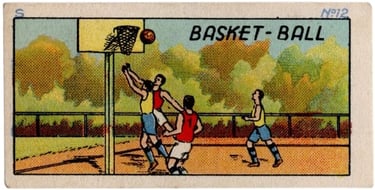
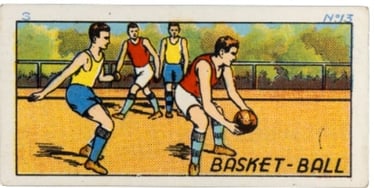
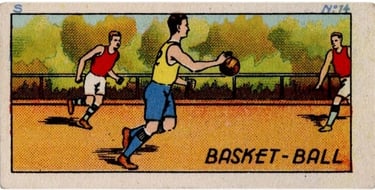
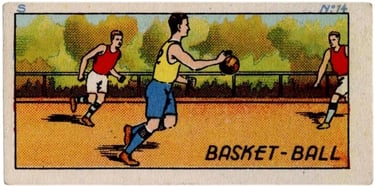
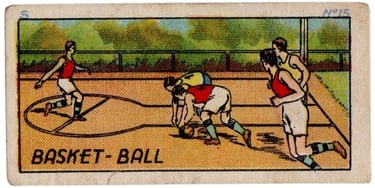
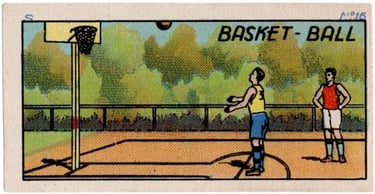
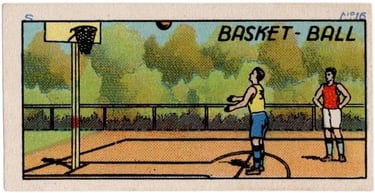
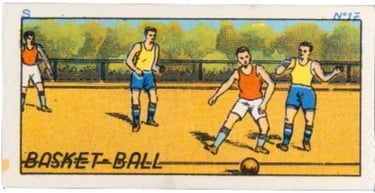
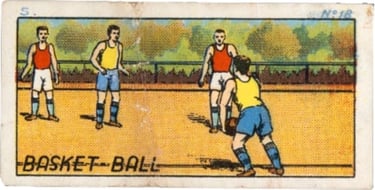
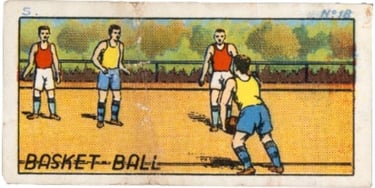
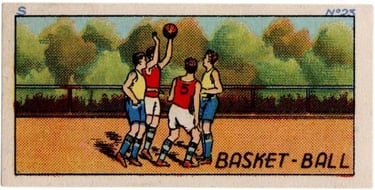
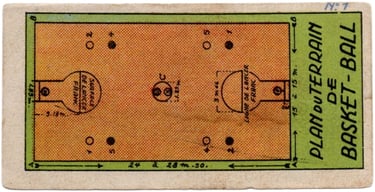
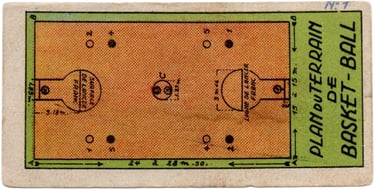
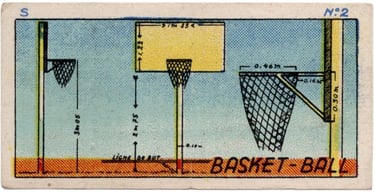
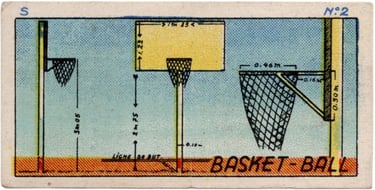
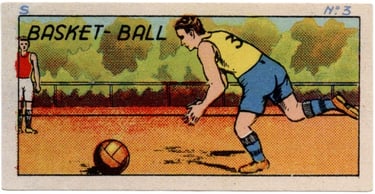
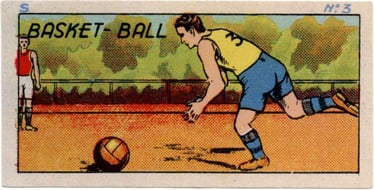
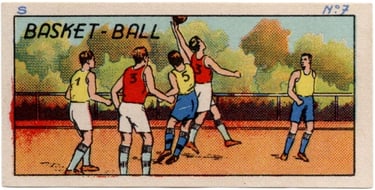
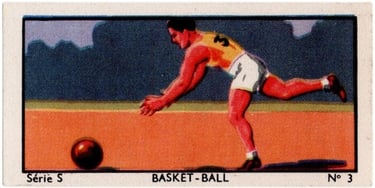
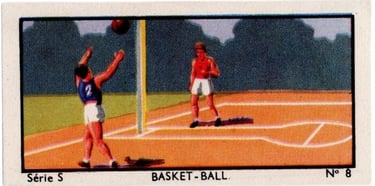
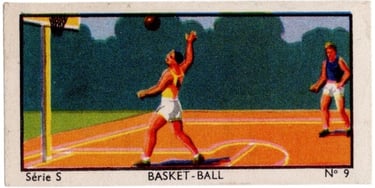
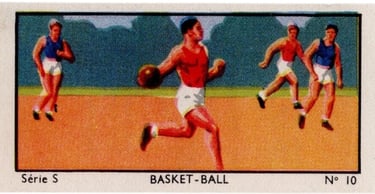
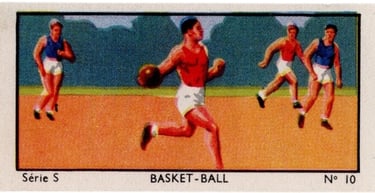
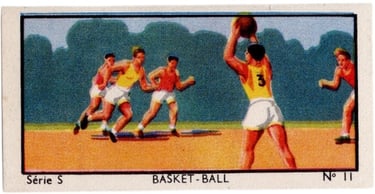
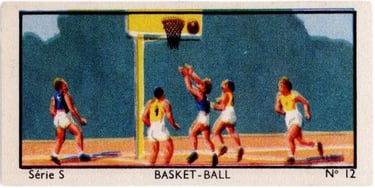
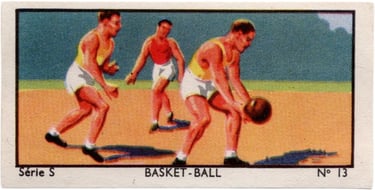
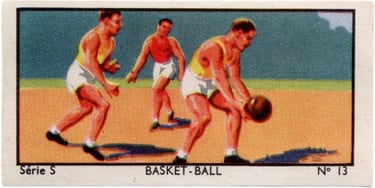
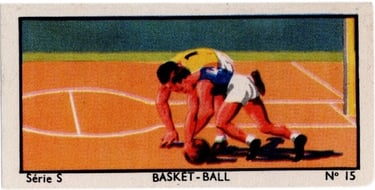
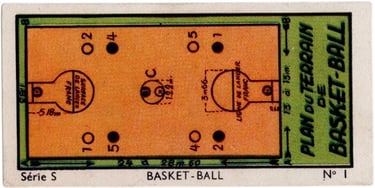
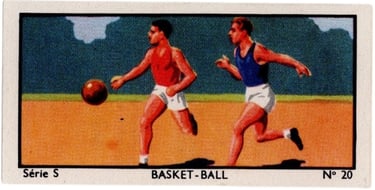
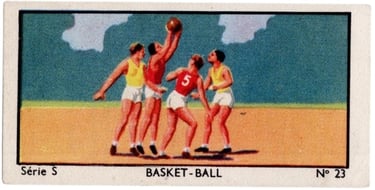
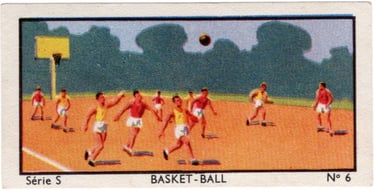
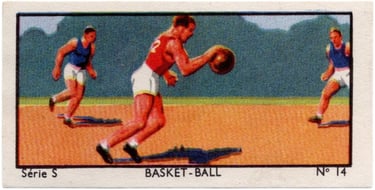
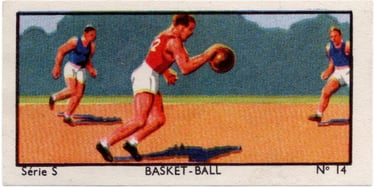
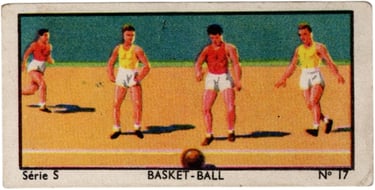
JACQUES CHOCOLAT LES SPORTS ILLUSTRES SERIE S TYPE 1 (BELGIUM)



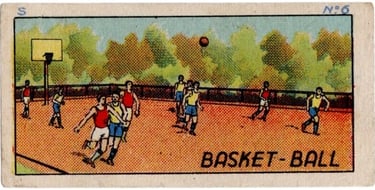





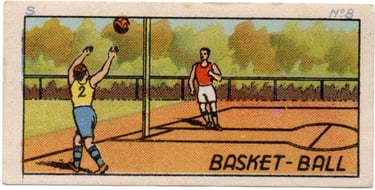
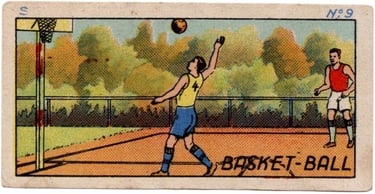
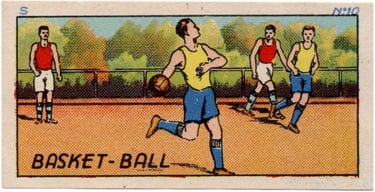
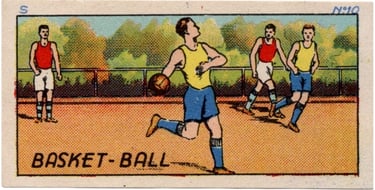
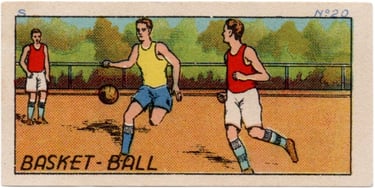
1933
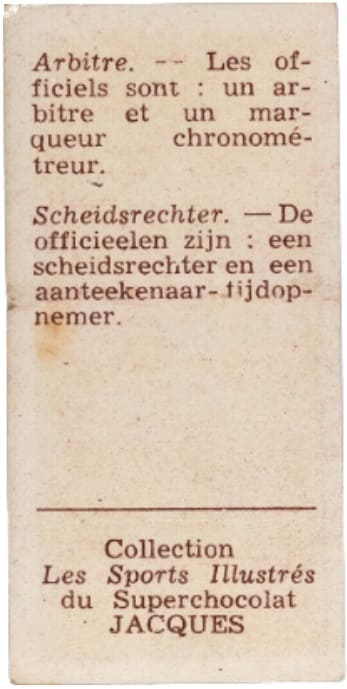
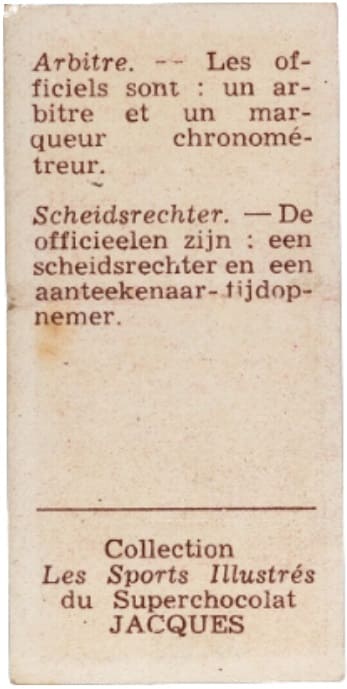





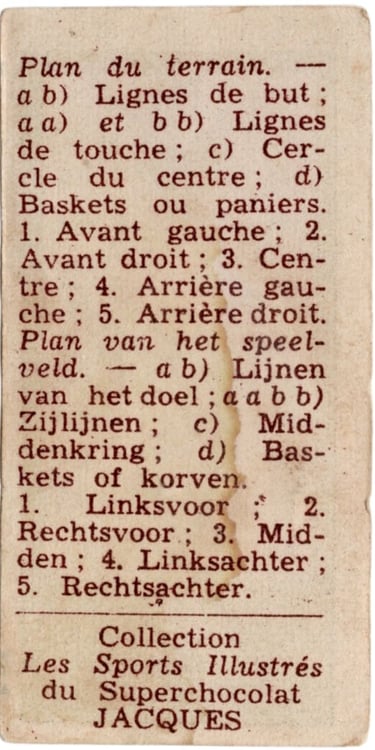
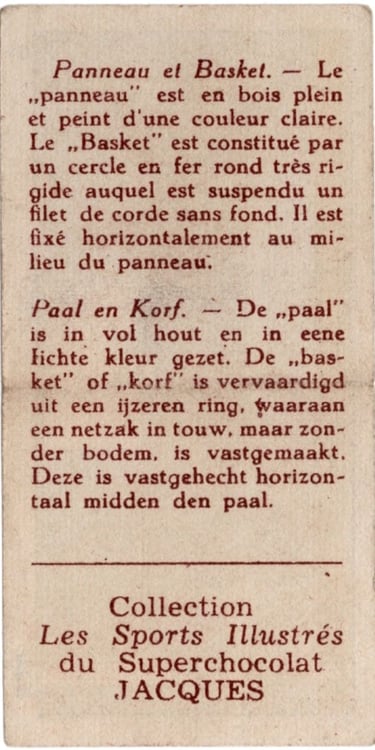
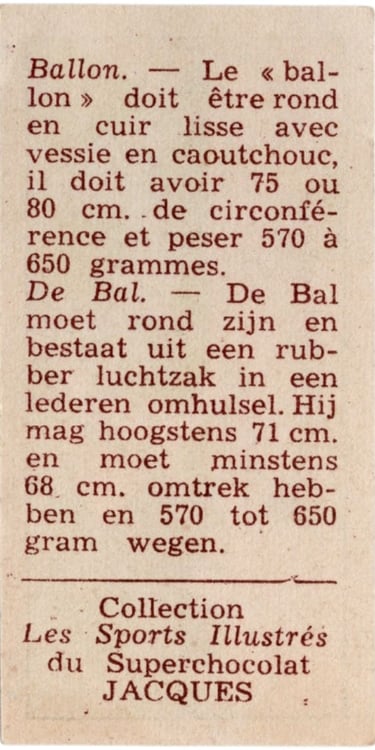
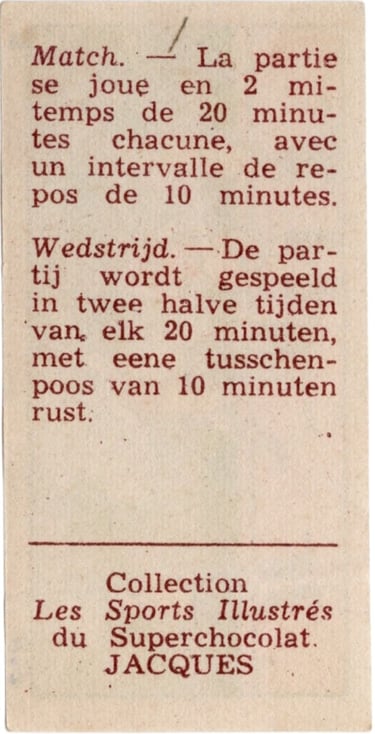
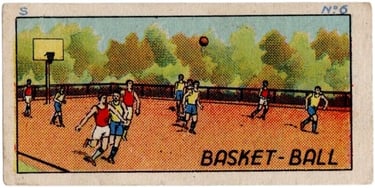
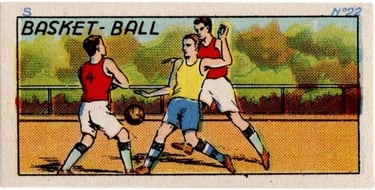
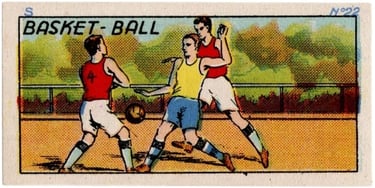
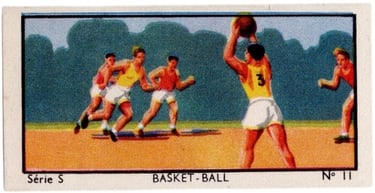
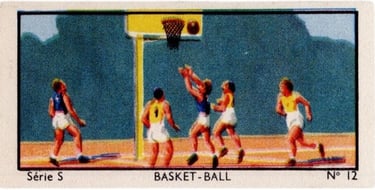
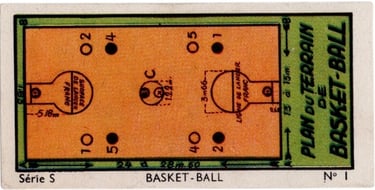
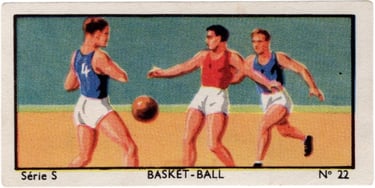
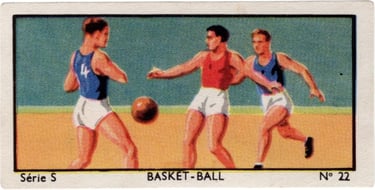
JACQUES CHOCOLAT LES SPORTS ILLUSTRES SERIE S TYPE 2 (BELGIUM)
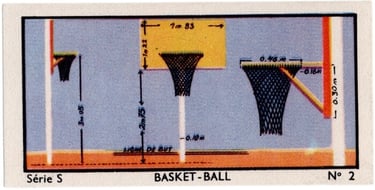
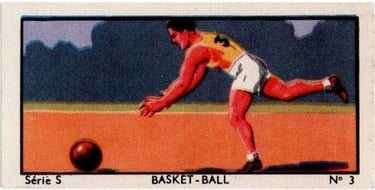





1933





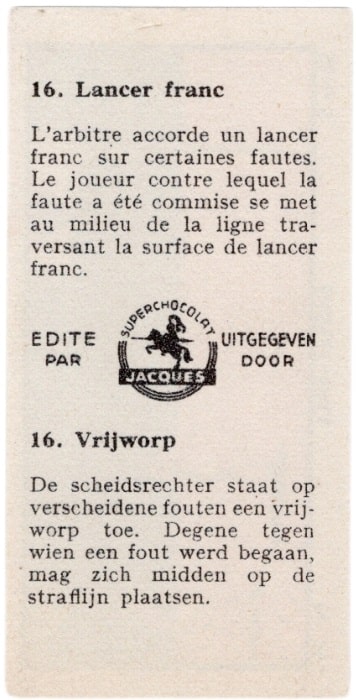
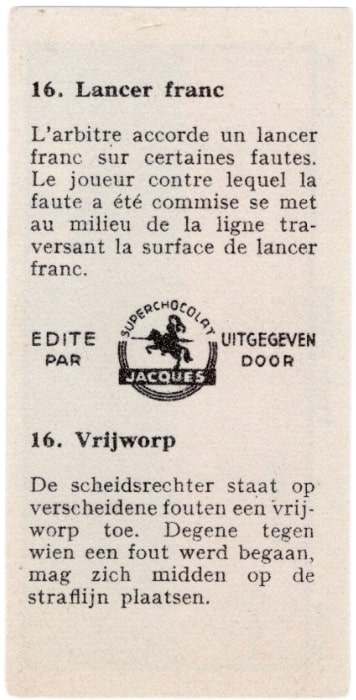


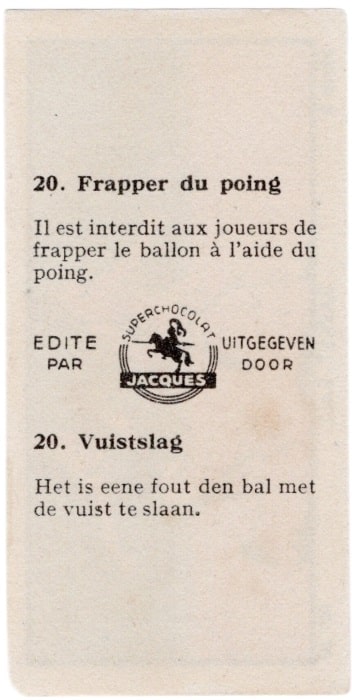
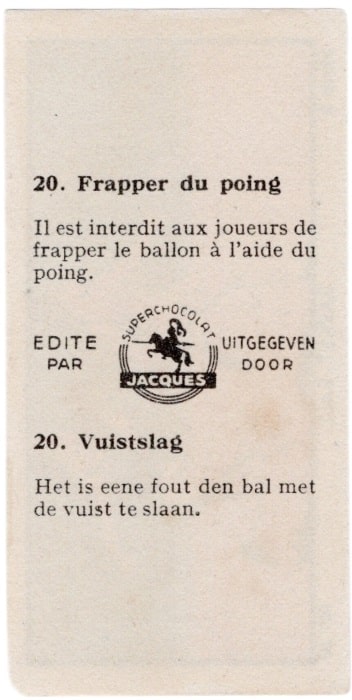


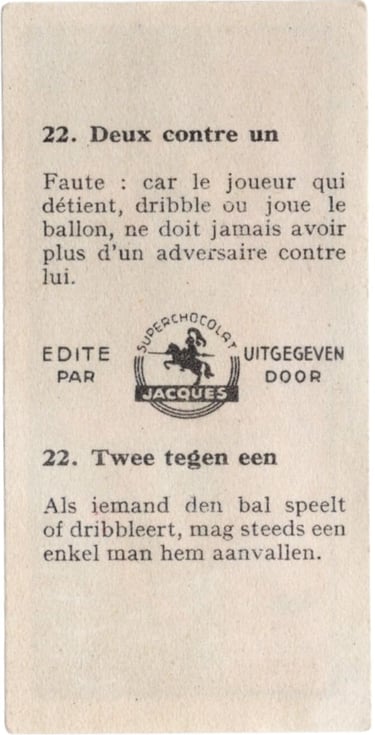
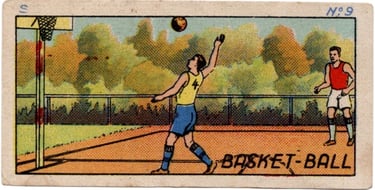
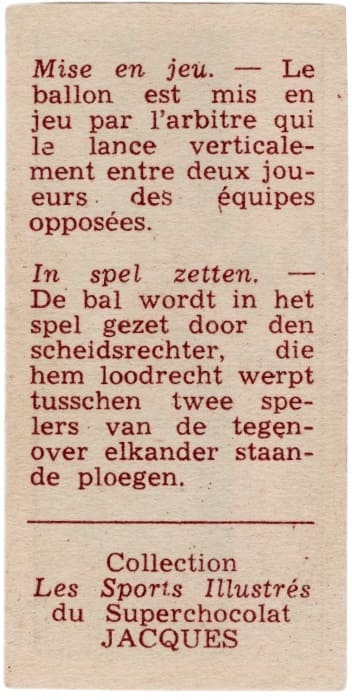
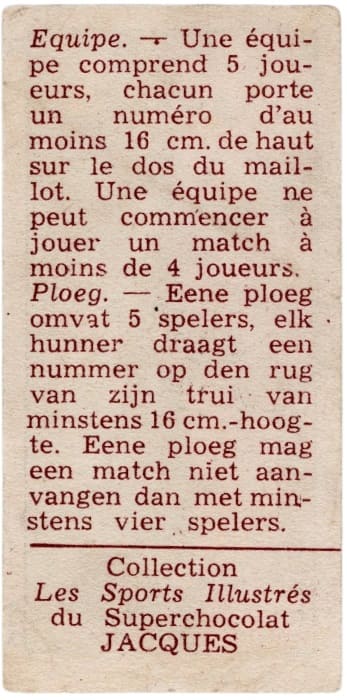
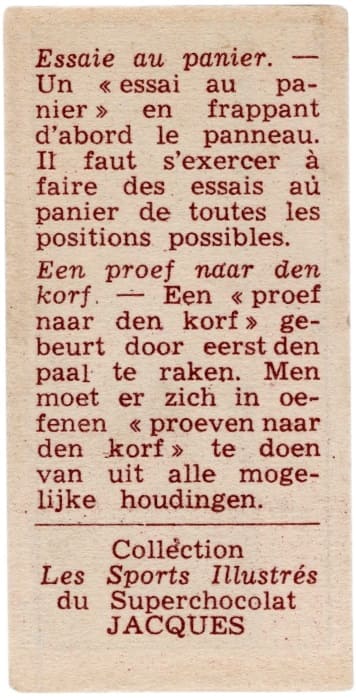
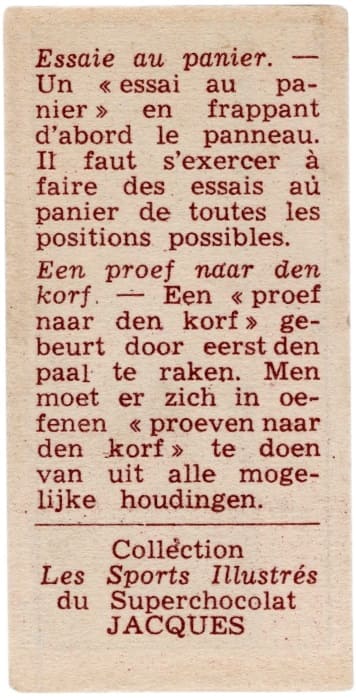
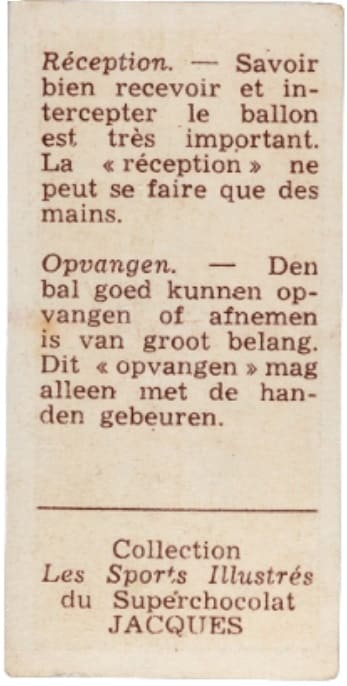
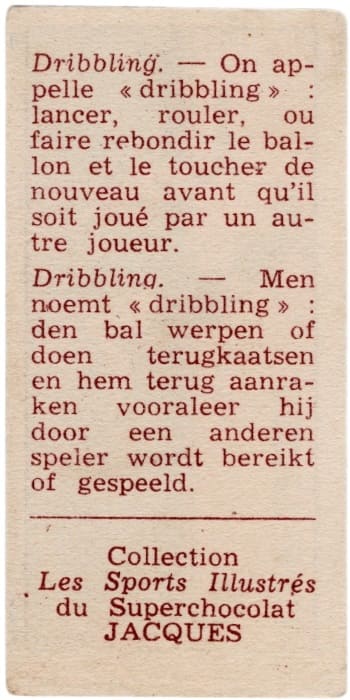
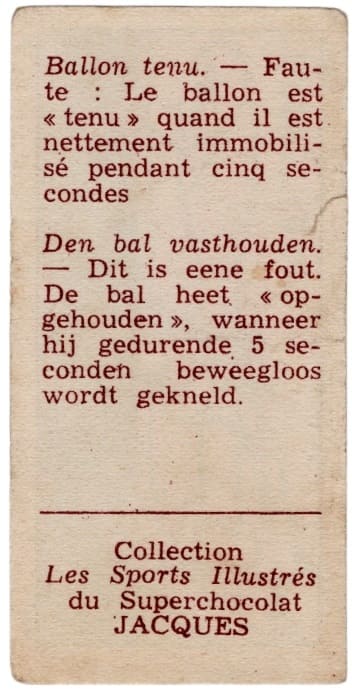
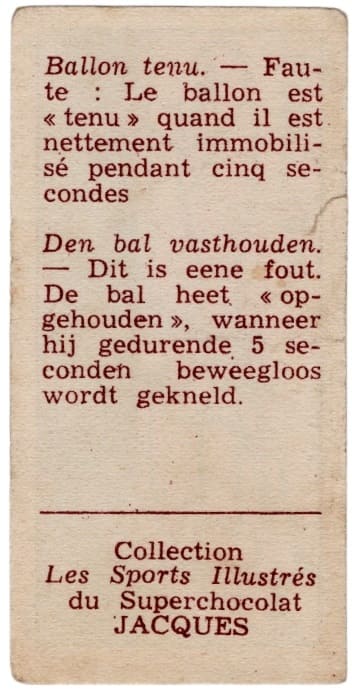
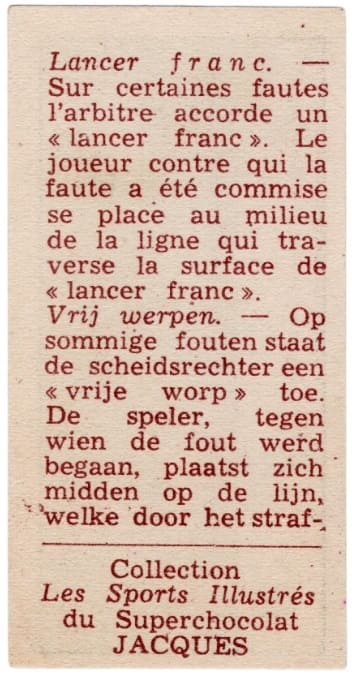
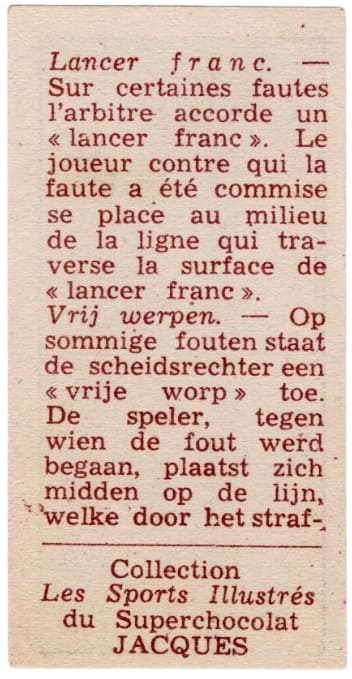
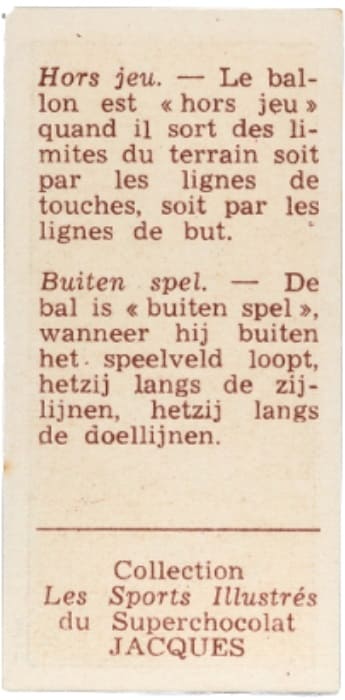
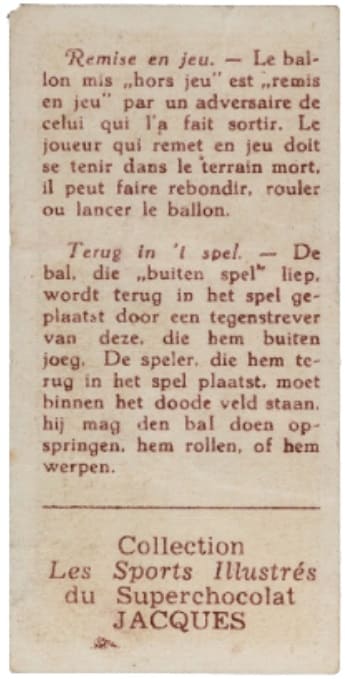
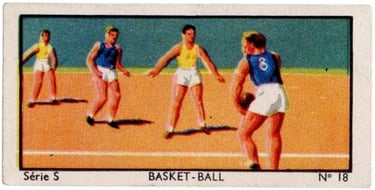
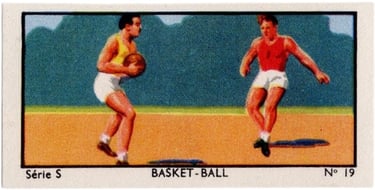
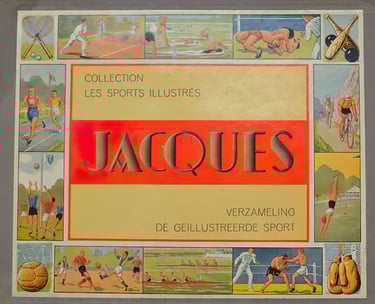
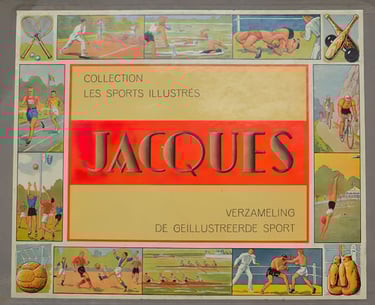
The Jacques Les Sports Illustres was a large set of 240 cards featuring a variety of sports each broken into their own series. There were 24 basketball cards, which were the "S" series. There were 2 types, Type 1 with the word "Basket-Ball" inside of the borders, and a Type 2 that included similar illustrations for all 24 cards with the text within the border, using a different font and reverse layout. In total, there are 48 basketball cards between both Types in the series. These cards were meant to be adhered to a accompanying album, so they are hard to find without adhesive/residue on the back.
Measurements: 1.375" x 2.5"

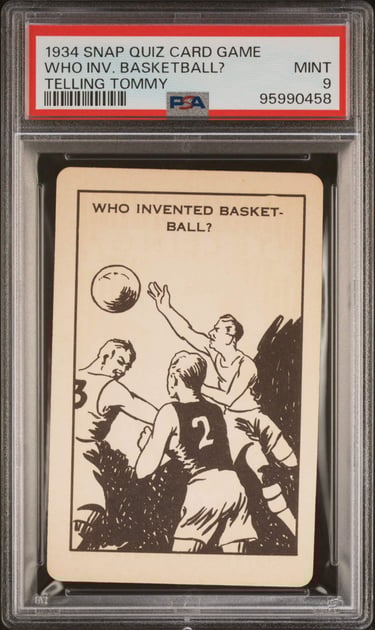
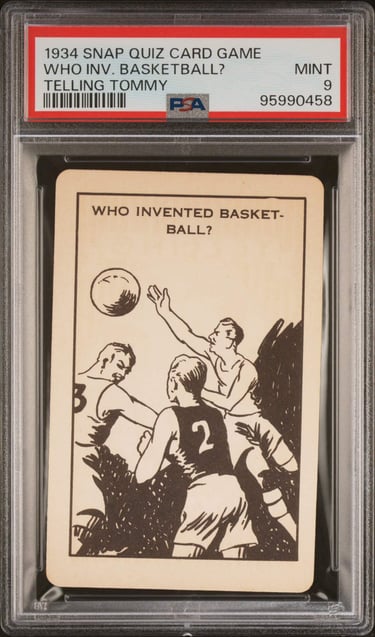
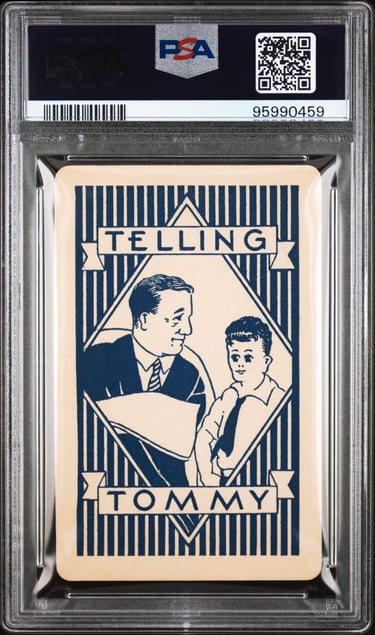
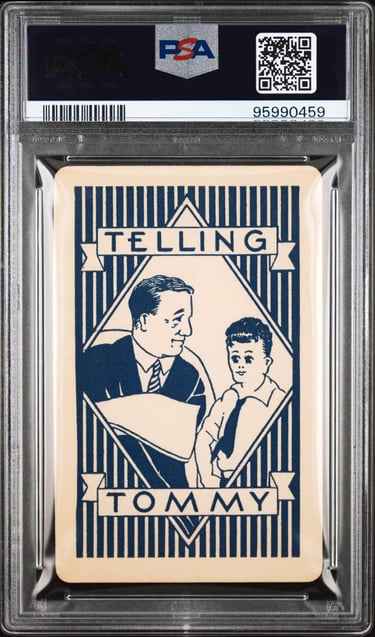
KING FEATURES SYNDICATE/WHITMAN QUIZ CARD GAME TELLING TOMMY - WHO INVENTED BASKETBALL?/ JAMES NAISMITH CARDS (U.S.A.)
These cards were part of a set of Question & Answer quiz cards licensed by King Features Syndicate and published by Whitman Snap in 1934 & 1935. The set consisted of 56 cards, 2 of which were basketball related, with the 2nd card being referred to as Naismith's "rookie card".
Measurements: 2.25" x 3.5"




1934
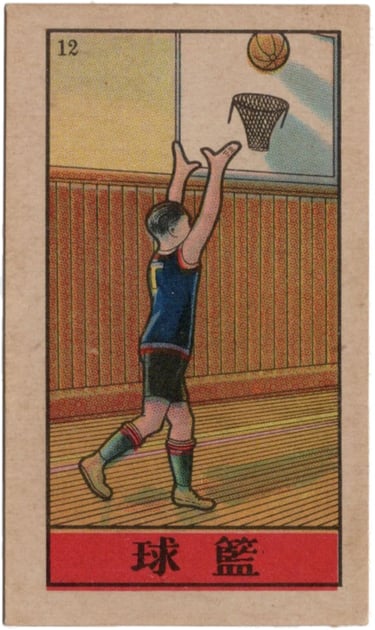
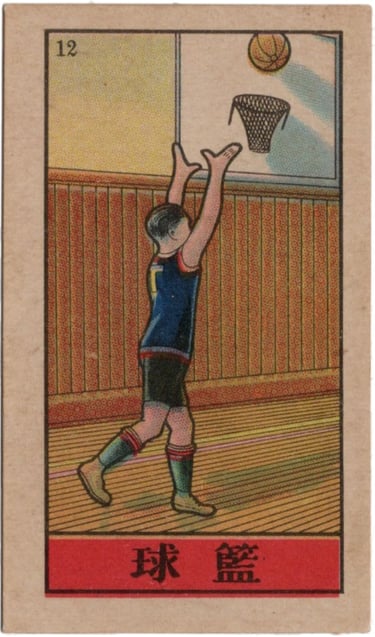
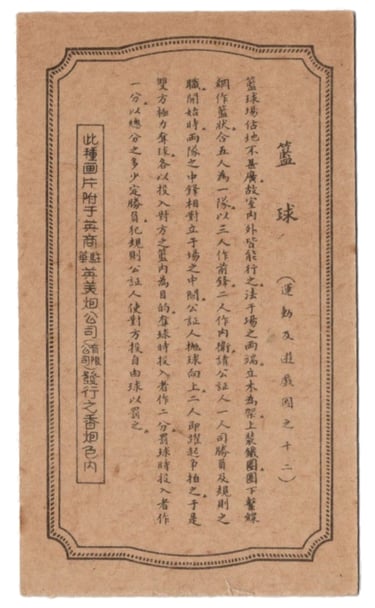
BRITISH AMERICAN TOBACCO SPORTS & GAMES #12 BASKETBALL (CHINA)
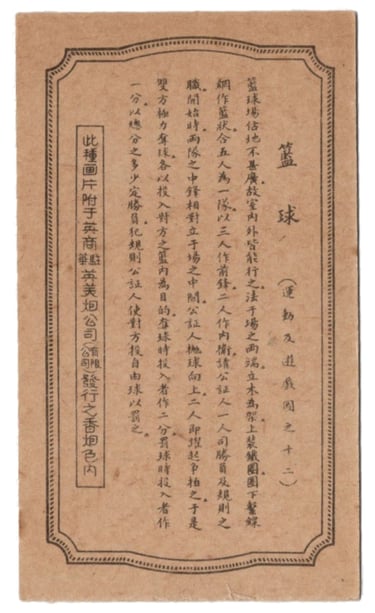
British American Tobacco issued a few series in the 1930’s to be issued specifically in China, most notably the 1934 “Hints on Association Football”, a 48-card set featuring soccer. Those cards presented illustrated action shots on the front, with Chinese text and the card number on the reverse. Far rarer was this “Sports and Games” Chinese issue, which was likely released in 1934. It also featured illustrated action shots, but from a variety of different sports and included the card number and text on the front. Card #12 was the only card in the set that featured basketball. The World Tobacco Card Index Classification number for this set is ZE3-4. There are two known variations of the back - One features a vertical panel box with B.A.T. name listed within it, the other does not.
Measurements: 1.25” x 2.5”
1934
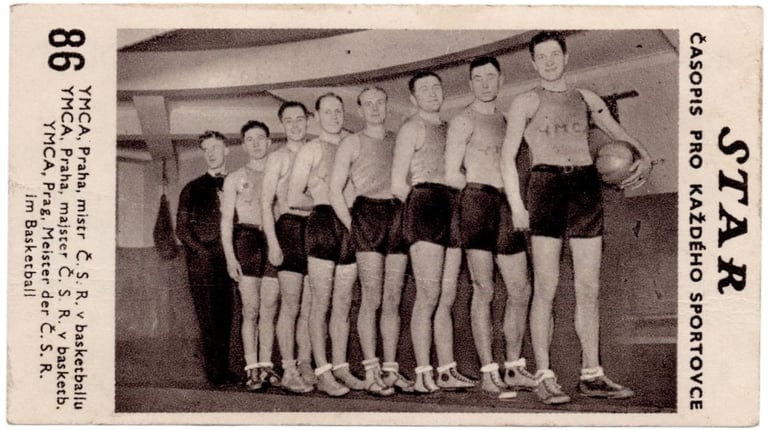
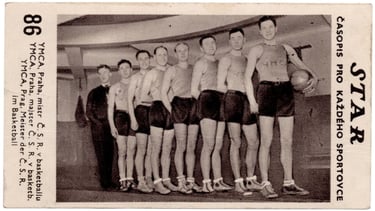
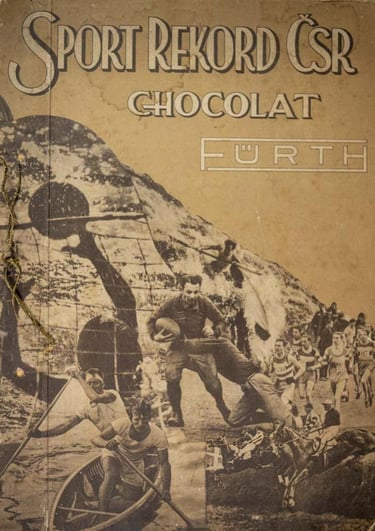
BONBONS FÜRTH CHOCOLAT/STAR SPORT REKORD ČSR #86 YMCA PRAHA BASKETBALL TEAM (CZECHOSLOVAKIA)
Star Magazine of Czechoslovakia, a "magazine for every athlete" produced these cards in cooperation with Bonbons Fürth Chocolat. It's presumed the magazine provided the images and the cards were given away with confectionery. There were 100 total cards in the set, with #86 being the only basketball card, featuring the YMCA Praha Team. The YMCA in Praha (Prauge) was founded in 1921, but was banned during the Nazi occupation and again by the communist regime in 1951. It was re-established in 1990 after the Velvet Revolution.
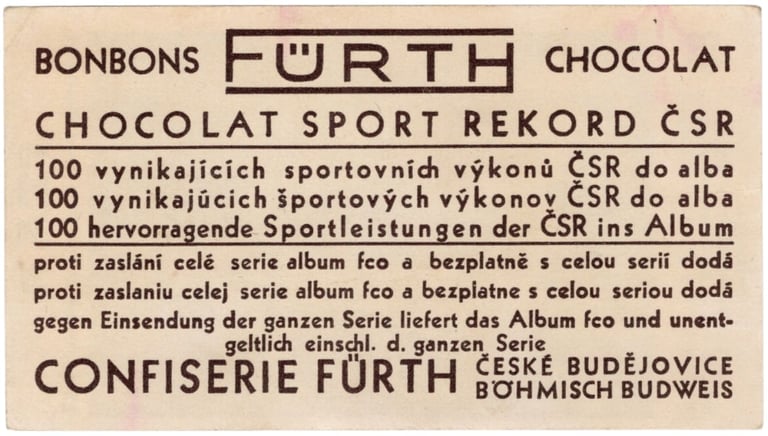
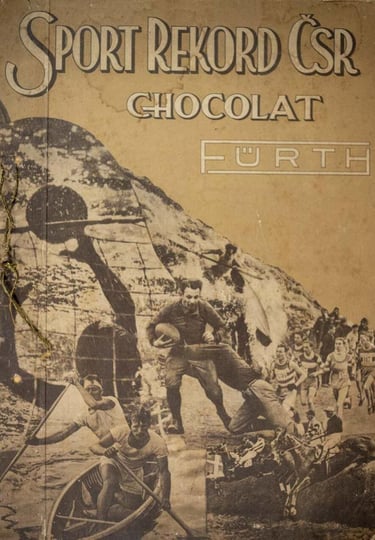
The back of the card is in 3 languages: Czech, Slovak and German. The cards were meant to be collected and pasted into the accompanying Sport Rekord ČSR album. The backs of the card state that if you send Fürth the whole set of individual cards, they will provide you the album (including the full set) free of charge.
Measurements: 3.875" x 2.125"
1934
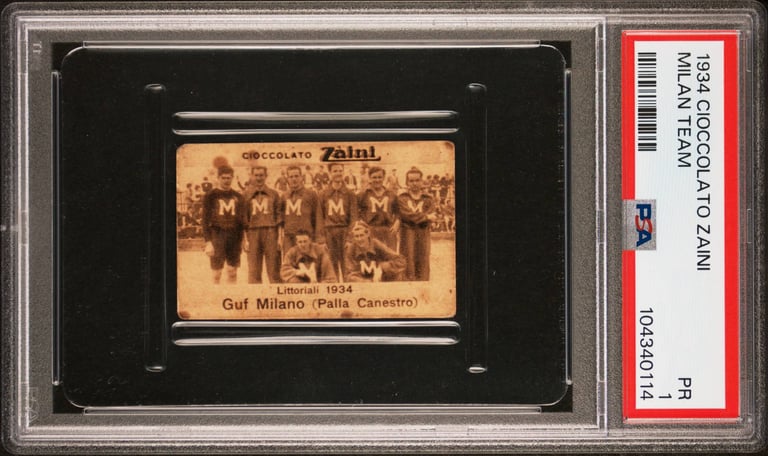
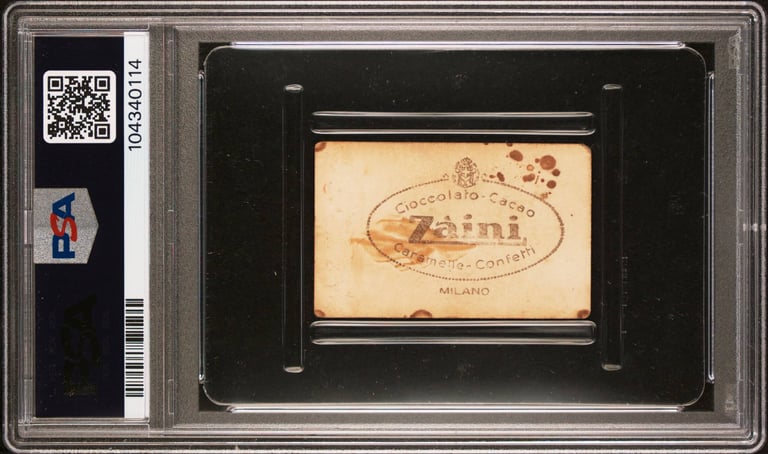
CIOCCOLATO ZAINI GUF MILANO (PALLA CANESTRO) (ITALY)
Zaini was an Italian chocolate company that produced a few sets of multi-sports cards in the 1920s/1930s. The only basketball card known in this releases is this card featuring GUF (Gruppos Universitario Fascista) Milano Team in the 1934 set. There is a rarer variation of this set that has black borders although I've never seen one of this particular card.
Measurements: 1.1875" x 1.875"
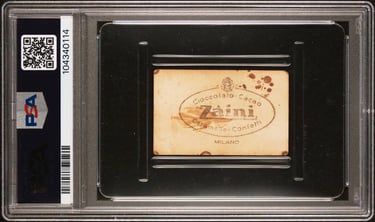
1934
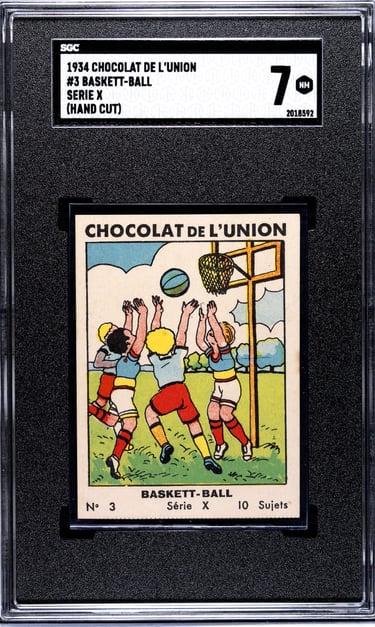
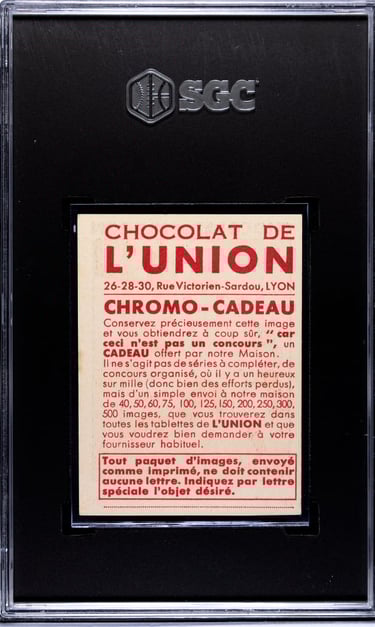
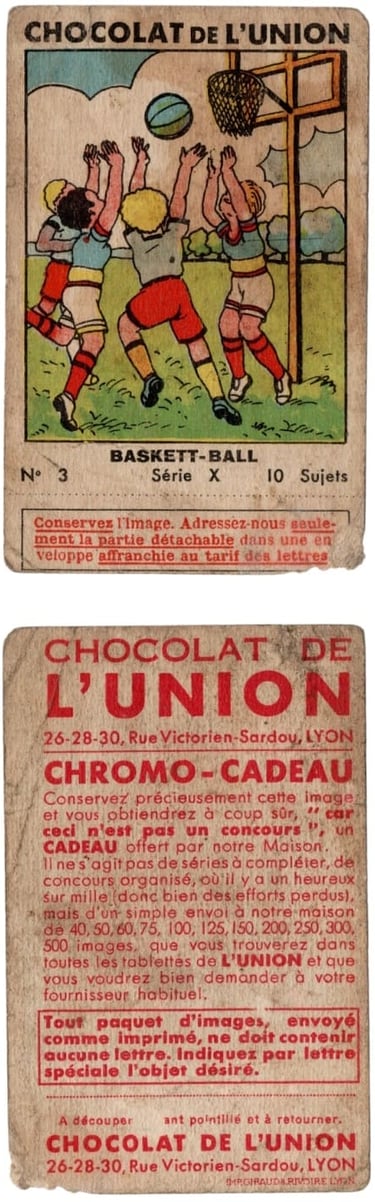
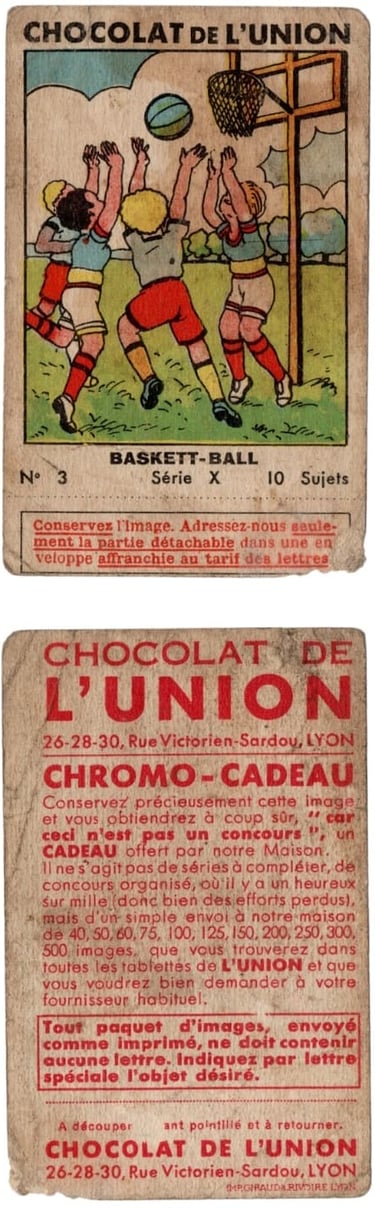
CHOCOLAT DE L’UNION SPORTS SÉRIE X, NO. 3 BASKETT-BALL (FRANCE)
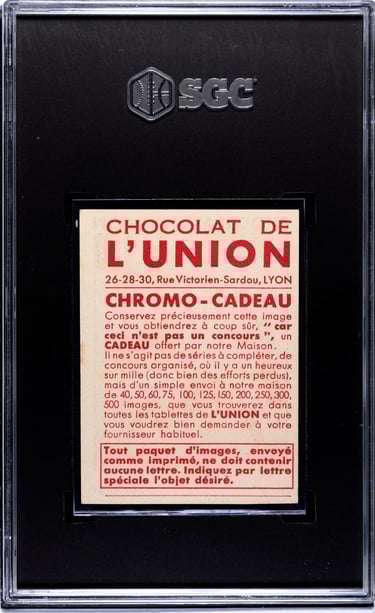
Chocolat De L'Union was a French chocolate company that produced cards that were released with it's products from the turn of the century until the 1950s. This particular set was released in 1934 and came in a series of subjects of 10 cards each. The exact number of series is unknown but I have seen Series 12, so there are at least that many. This card was in their illustrated sports series 10 and is the only basketball card example I've seen in any of their sets. The card originally came with a redemption tab at the perforated bottom and the reverse mentions you could send in these tags for gifts. The redemption tab is missing from this card.
Measurements: 2" x 2.625"
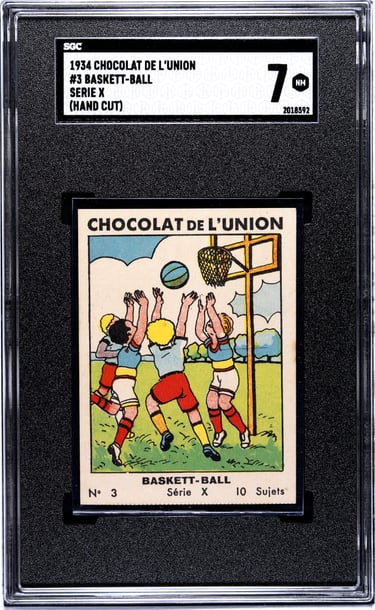
1934
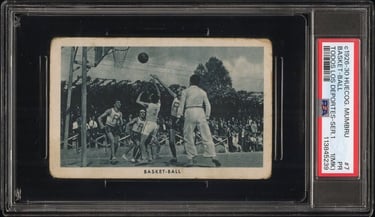
HUECOGRABADO MUMBRÚ TODOS LOS DEPORTES, SERIE 1, NO. 7, BASKET-BALL, COLECCIÓN DE 21 CROMOS (SPAIN)
Although PSA labeled this Huecograbado Mumbrú card as 1925-1930, it has been brought to my attention that this card is likely a 1934-35 release. The evidence lies on the Boxing card from the same series set that features an image of a match between Paolino Uzcudun vs Max Schmeling in the Montjuic Stadium that has been confirmed as taking place in 1934. The advertisement on the back of the card is for the Tabu House Chocolate Factory. Like most Spanish cards at the time, I assume that the advertiser varies, so there could be many different versions of the back of this card. Measurements: 4.25" x 2.75"
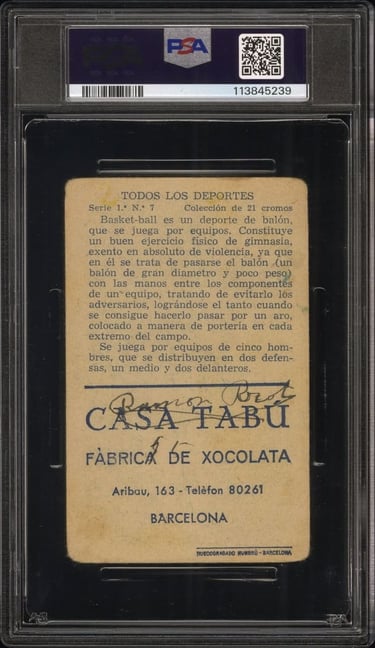
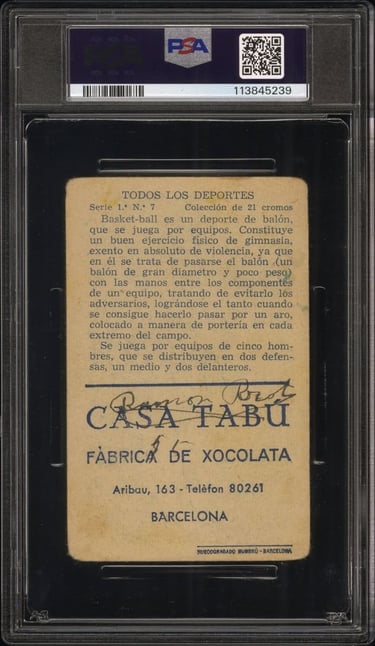
circa 1934
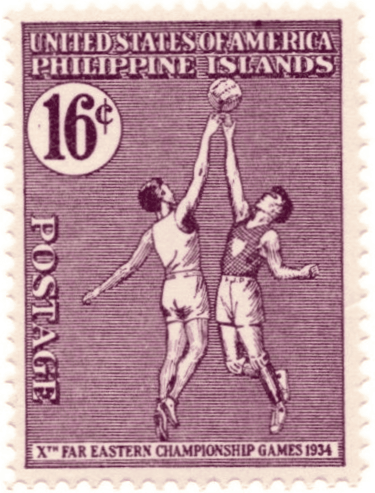

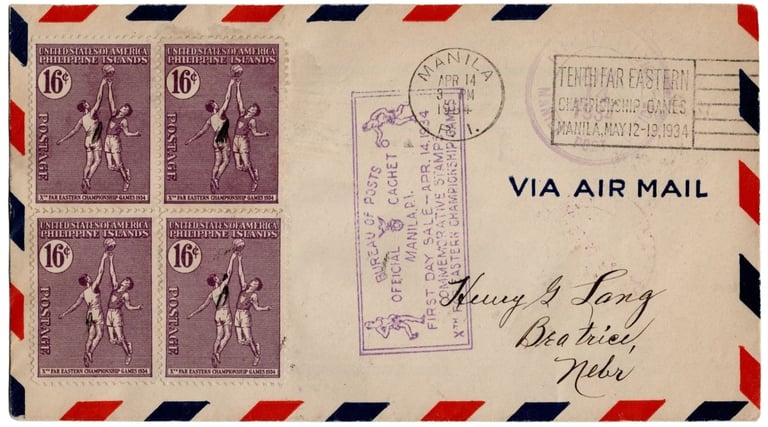
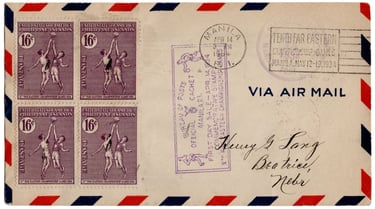
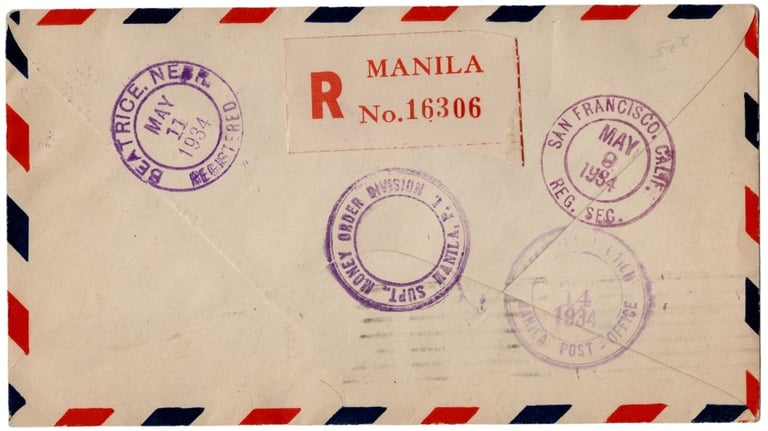
FIRST DAY COVER WITH 10th FAR EASTERN CHAMPIONSHIP GAMES STAMPS, THE FIRST STAMP TO EVER FEATURE BASKETBALL (PHILIPPINES)
Released on April 14th, 1934, the world's first basketball stamp commemorated the X Far Eastern Championship Games, a precursor to the Asian Games. The Games were held in Manila from May 16–20, 1934, and included competitors from China, Japan, the Dutch East Indies, and the Philippines. Eight sports were contested, with baseball, basketball, and tennis selected for depiction on postage stamps. There is occasional debate over whether the Philippines or the United States should be credited with issuing the first basketball stamp. At the time, the Philippines was under U.S. sovereignty following the Treaty of Paris, in which Spain ceded the colony to the United States after the Spanish-American War of 1898. The Philippines did not gain full independence until 1946. Despite this, the stamps were issued locally and identify the Philippines as the issuing authority.
1934
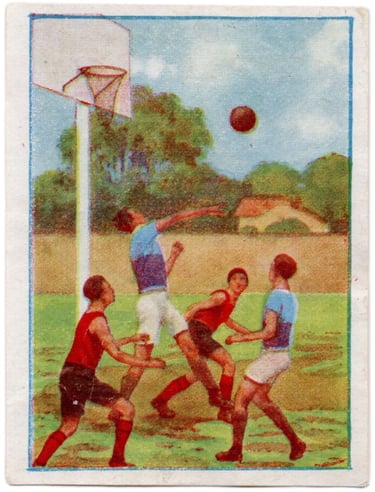
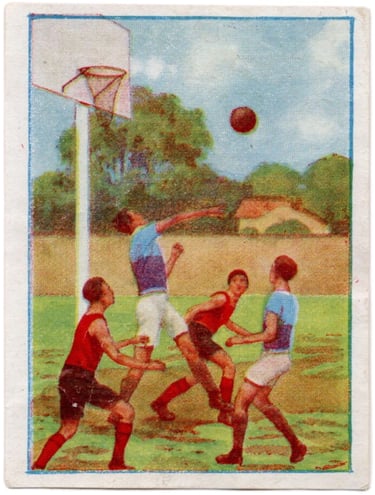
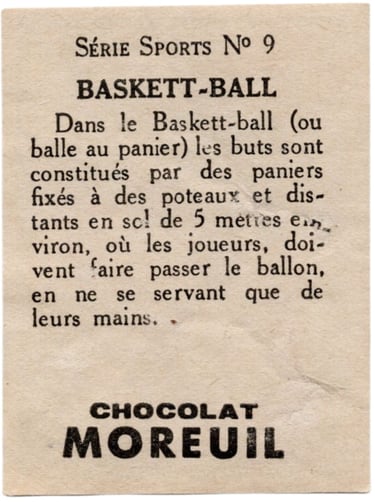
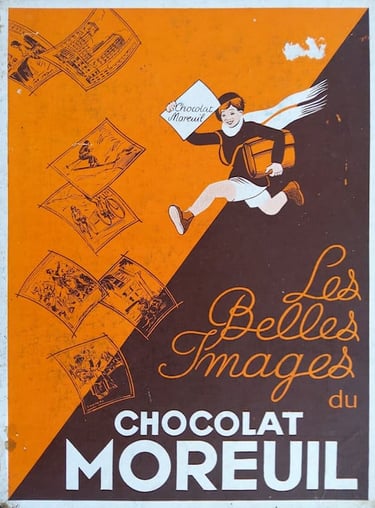
CHOCOLAT MOREUIL LES BELLES IMAGES SÉRIE SPORT NO. 9 BASKETT-BALL (FRANCE)
Chocolat Moreuil was a popular chocolate company in France that produced cards to be distributed with its products and collectors albums to store them. Their 1935 album, Les Belles Images, included a 36 card sports series that had a single basketball card, number 9.
Measurements: 1.75" x 2.3125"
1935
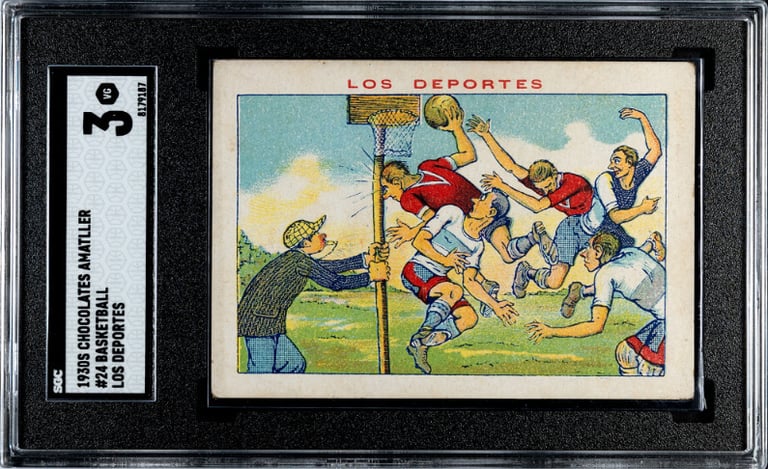
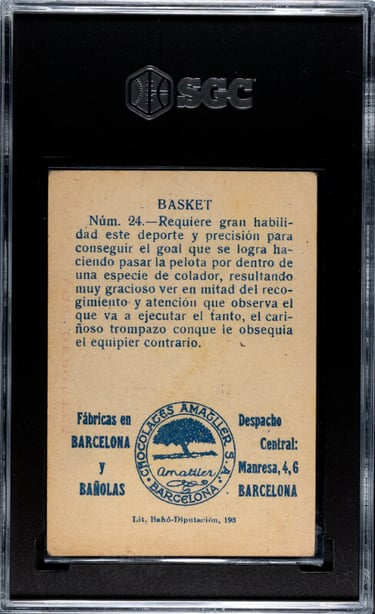
CHOCOLAT AMATLLER LOS DEPORTES #24 BASKET (SPAIN)
The Los Deportes set by Chocolat Amattler consisted of 40 cards with humorous illustrations featuring various sports. There is 1 basketball card (pictured here). The exact date of when this set was produced/released is unknown.
Measurements: 2.375" x 3.375"


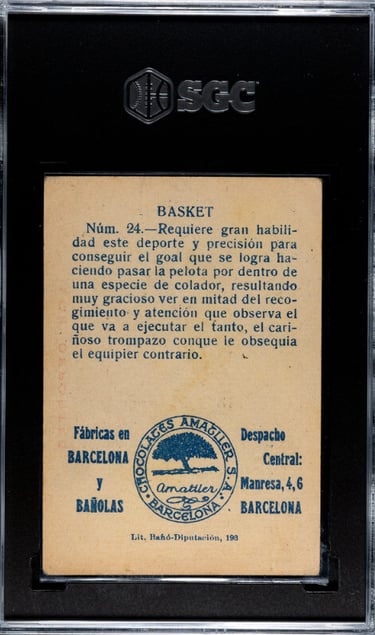
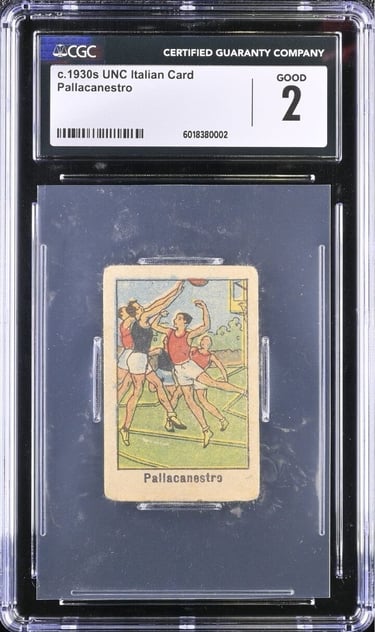
circa 1930s
PALLACANESTRO ILLUSTRATED CARD, UNKNOWN PUBLISHER/UNCLASSIFIED (ITALY)
1930s Pallacanestro card, exact date and publisher remains unknown but it looks very similar to the illustrated cards that Marca Stella was publishing at the time.
Measurements: 1.25" x 1.875"


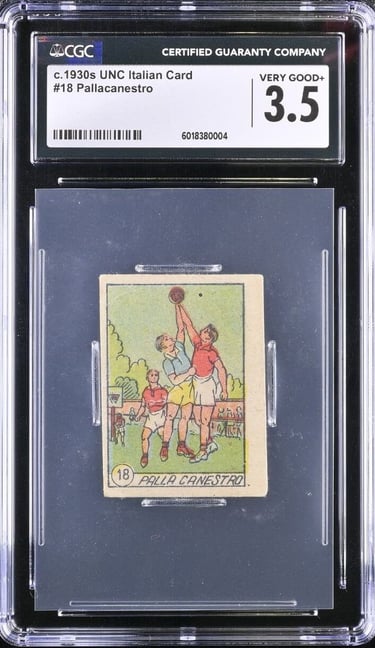
circa 1930s
PALLACANESTRO #18 ILLUSTRATED CARD, UNKNOWN PUBLISHER/UNCLASSIFIED (ITALY)
1930s Pallacanestro card, exact date and publisher remains unknown but it looks very similar to the illustrated cards that Marca Stella was publishing at the time.
Measurements: 1.25" x 1.750"
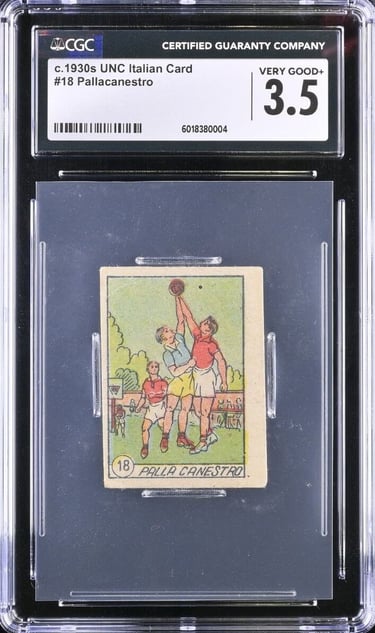
circa 1930s
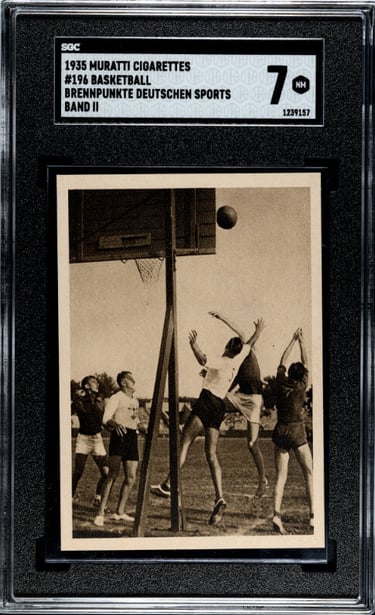
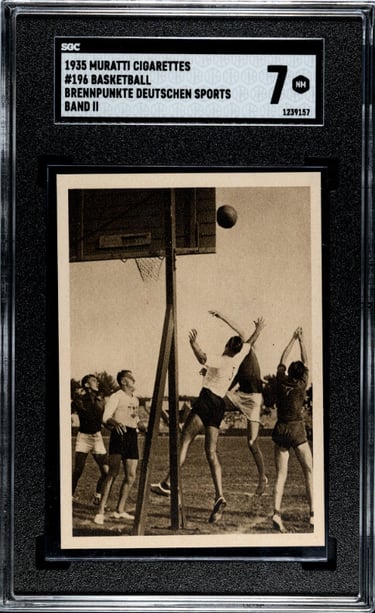
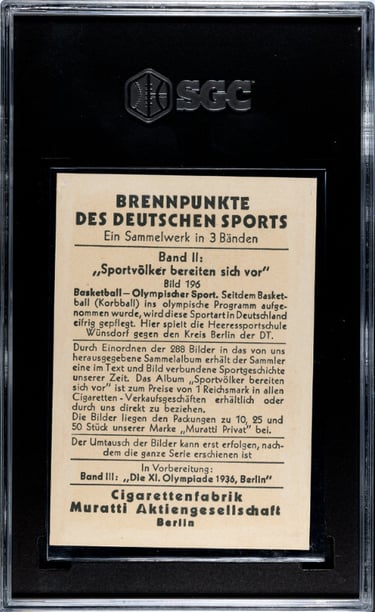
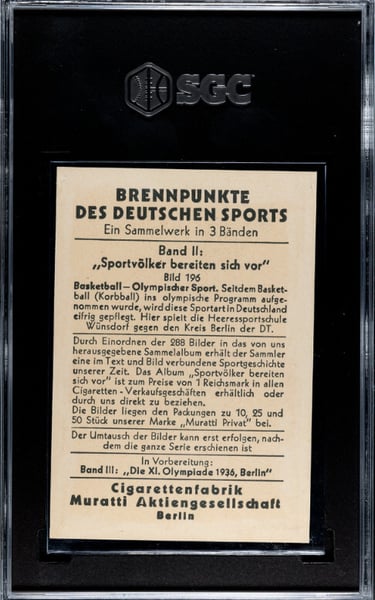
MURATTI CIGARETTES BRENNPUKTE DES DEUTSCHEN SPORTS BAND II #196 BASKETBALL (GERMANY)
This set was released by Muratti cigarettes of Berlin and features sports and athletes of the 1936 Berlin Olympic games. There were over 700 cards in 3 subsets and there were 2 basketball cards in the set. This is the more common of the two and and shows the Wünsdorf team vs the Berlin team while training for the Olympics. This was the first basketball card ever produced in Germany.
Measurements: 2.5" x 3.5"
1935
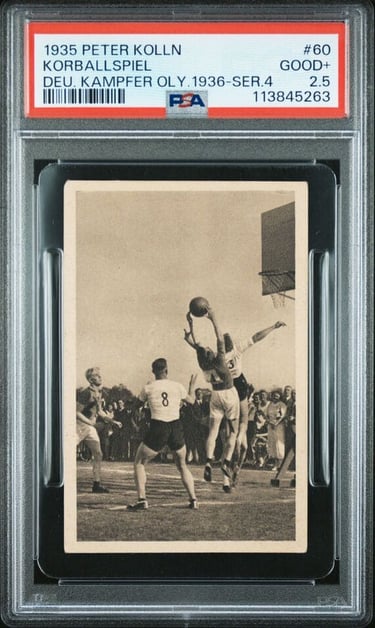
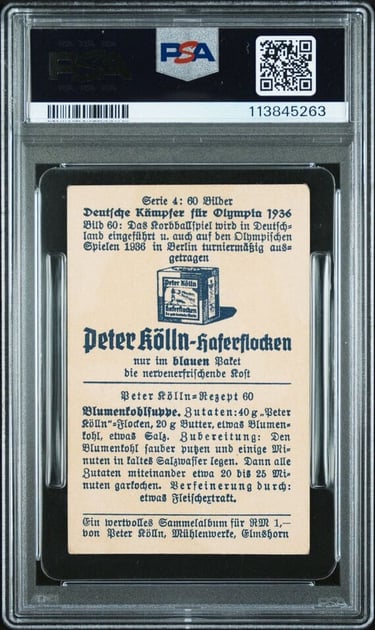
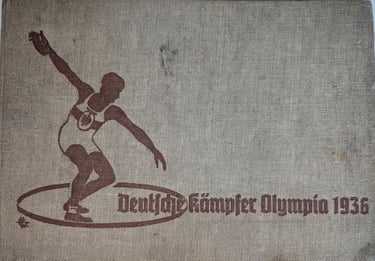
PETER KÖLLN DEUTSCHE KÄMPFER FÜR OLYMPIA, SERIE 4, BILDER 60, KORBBALLSPIEL (GERMANY)
The Peter Kolln company is a German oatmeal company that has been in business since 1820. In 1935, they released this set that consisted of 60 cards that all featured athletes and games of the upcoming 1936 Berlin Olympics. This is the only basketball card in the set.
Measurements: 2" x 3.125"
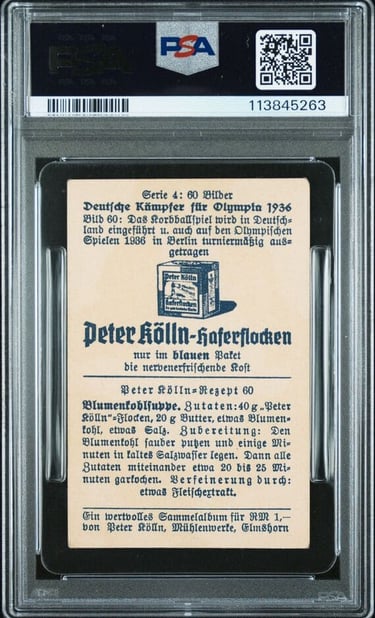
1935
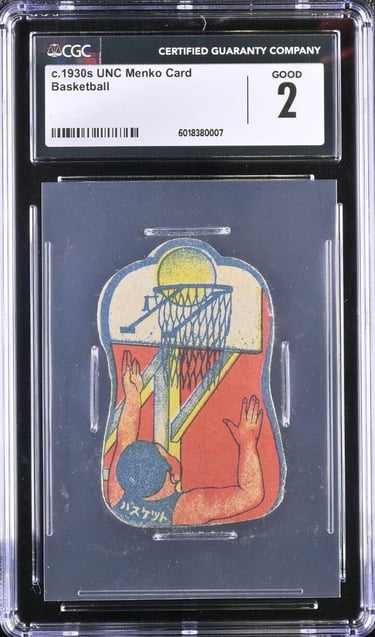
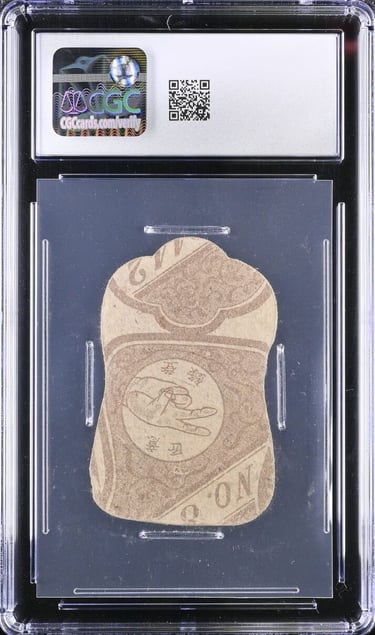
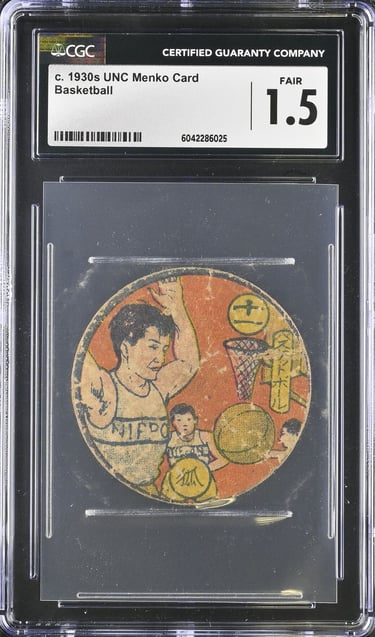
MENKO BASKETBALL CARD (JAPAN)
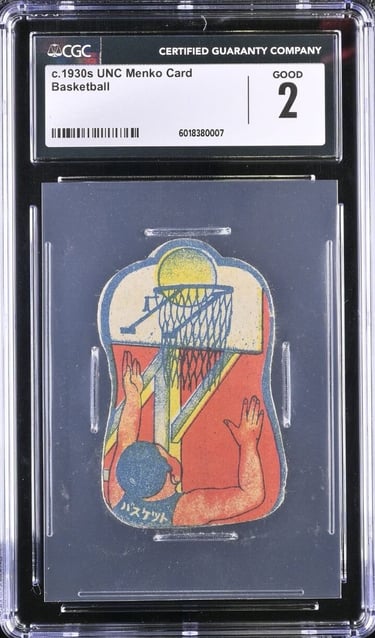
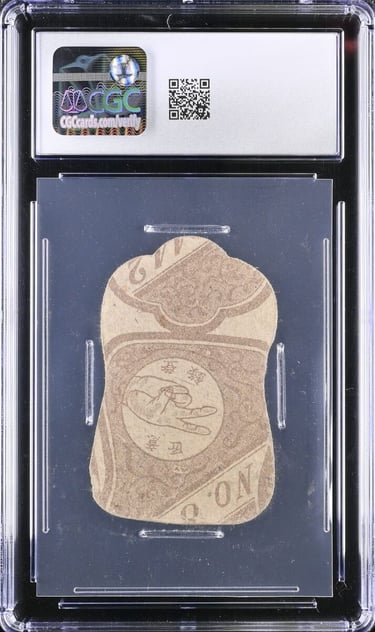
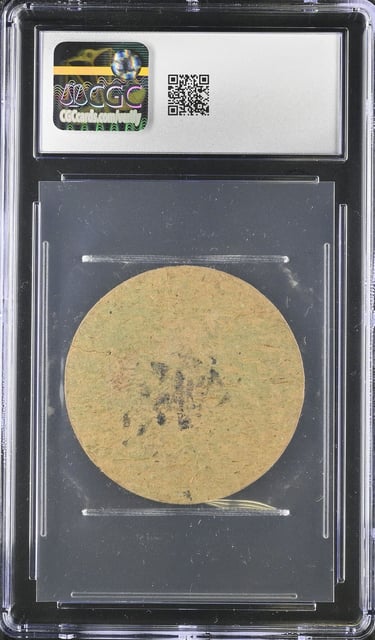
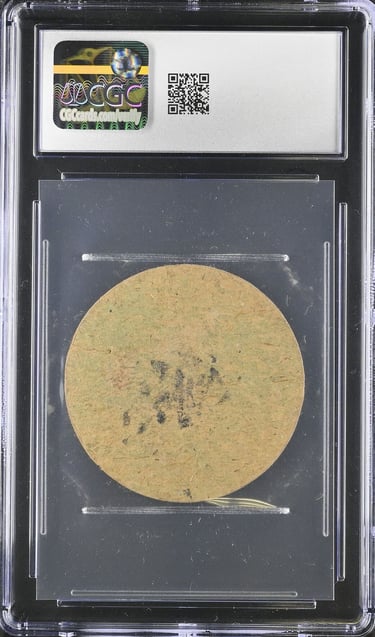
I cannot find any information regarding this unique Menko card. The back of the players uniform on front translates to "basket" and the back of the card translates to the design copyright. The other examples I've seen of this card display different numbers on the back, so I assume a particular number was not assigned to each card. Other cards released in this set all highlight Olympic sports, so I would assume this was issued around the 1936 Olympic games or shortly thereafter.
Measurements: 1.5" x 2.5"
circa 1930s
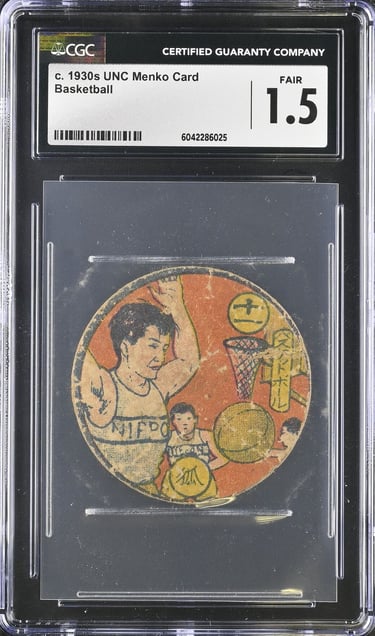
JAPANESE MENKO CARD - NIPPON NATIONAL TEAM, MANUFACTURER UNKNOWN (JAPAN)
This is the only example of this Menko card I have ever seen. Nippon (listed on jersey's) is the Japan National Basketball team. Japan has participated in Olympic basketball events 7 times and the FIBA World cup 6 times since 1936.
Measurements: Approx. 2" in diameter.
circa 1930s
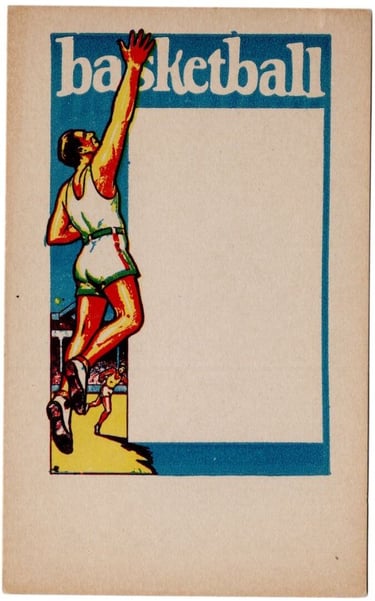
TRADE CARD FOR ADVERTISING OR AUTOGRAPHS (UNKNOWN MAKER) (U.S.A.)
Blank back, measures 2.5" x 4"
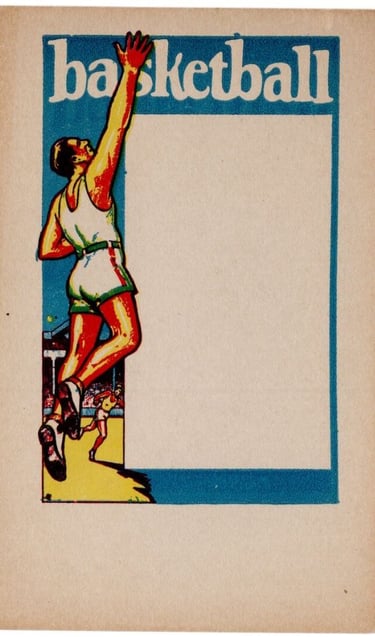
circa 1930s
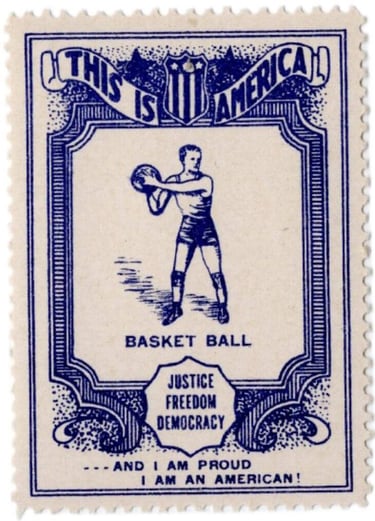
"THIS IS AMERICA" BASKETBALL CINDERELLA POSTER STAMP
The "This is America" series featured 99 poster stamps that celebrated American history and heritage, showcasing illustrations of historical figures, institutions, holidays, landmarks and sports. There was 1 stamp in the set that featured basketball. The stamps were printed in blue on a white background, with a variation printed in purple on a blue background.
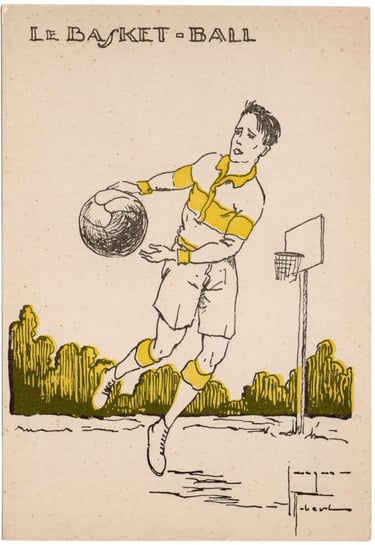
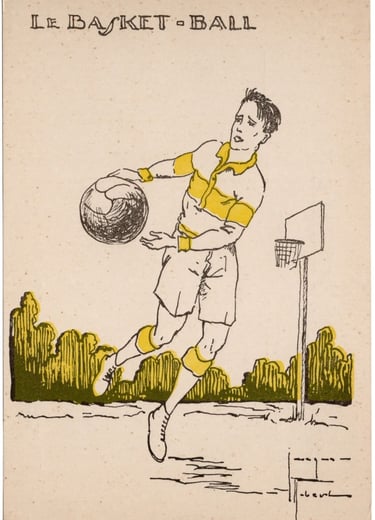
ILLUSTRATED LE BASKET-BALL POSTCARD (FRANCE)
circa 1930s
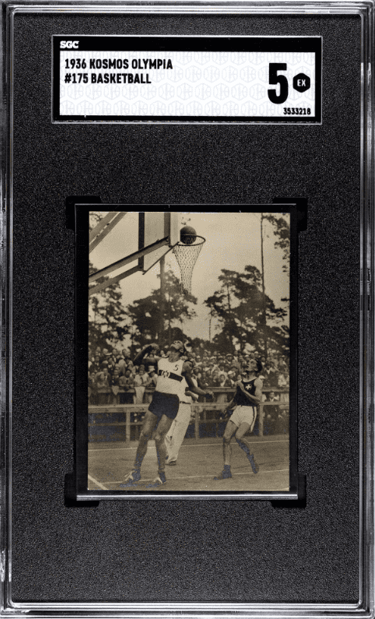
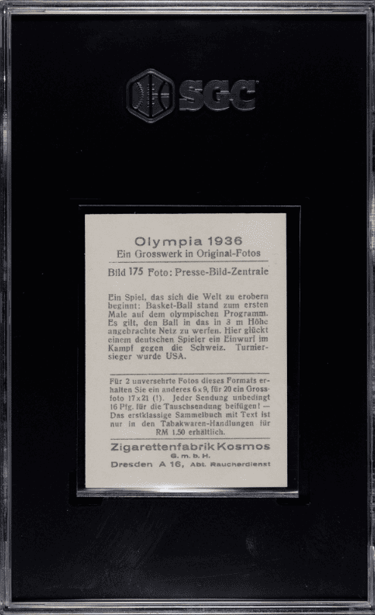
KOSMOS OLYMPIA #175 BASKETBALL (GERMANY)
The Kosmos Olympia cards are another German card that features Olympic games. The backs of the card give descriptions of the athletes and games and mention a special offer to redeem a larger 6"x9" card. I have yet to see an example of the 6"x9" basketball card from this set if it exists.
Measurements: 2.375" x 3.375"
1936
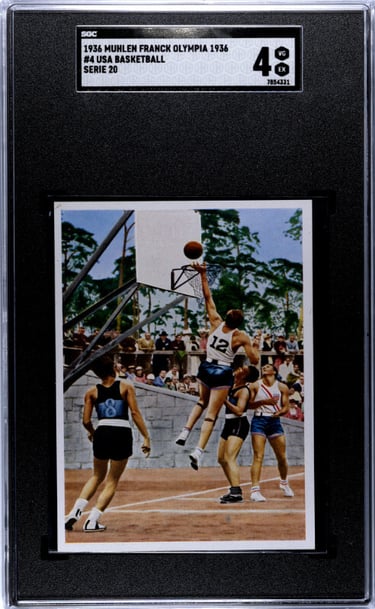
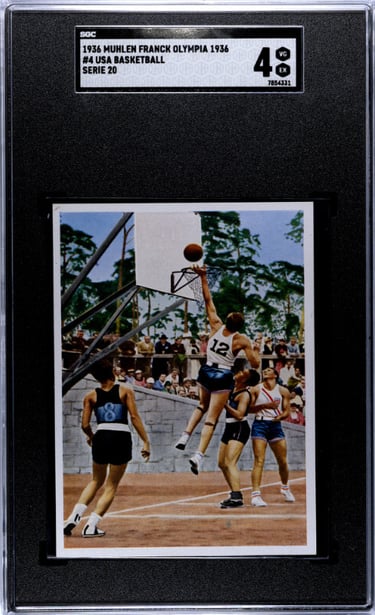
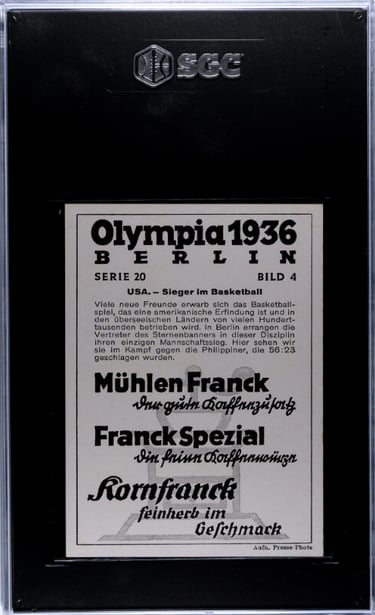
MUHLEN FRANCK OLYMPIA SERIE 20 #4 USA BASKETBALL (GERMANY)
Mühlen Franck was a coffee company in Berlin that also produced cards for the 1936 Olympics. This card featured the U.S.A. team and was in color, which many other German cards released for the games were not. The U.S.A. defeated Mexico in the final game to become the first team to win a gold medal in basketball.
Measurements: 2.75" x 4.125"
1936
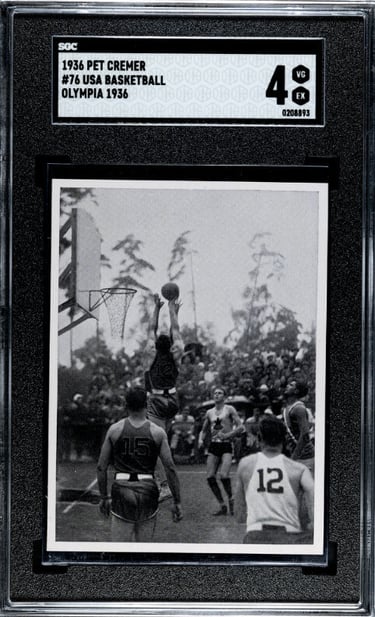
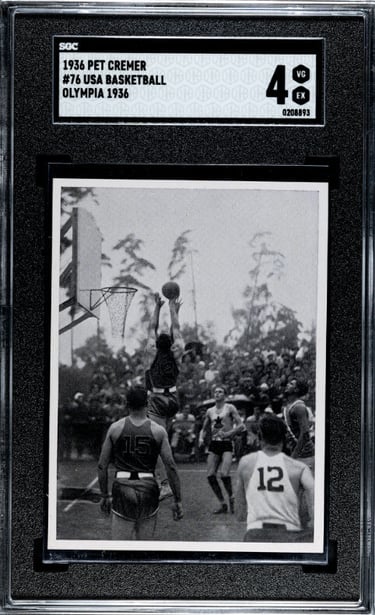
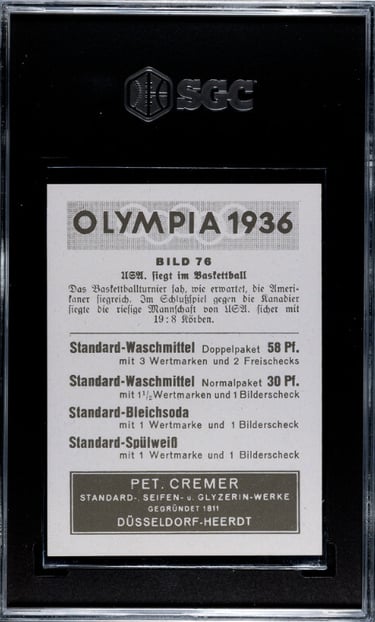
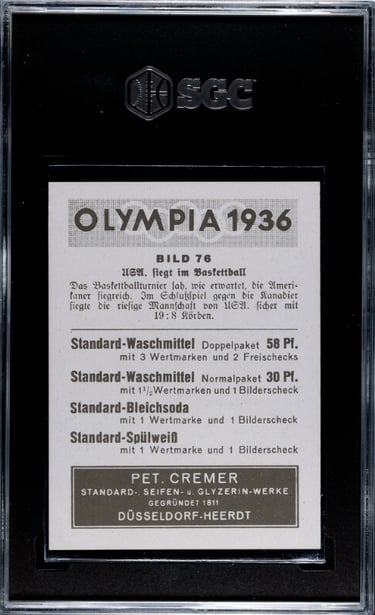
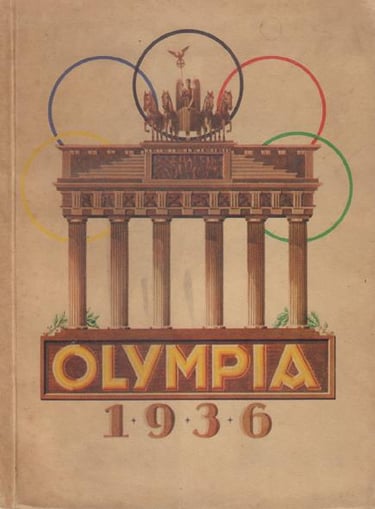
PET CREMER OLYMPIA #76 USA BASKETBALL (GERMANY)
Pet Cremer was a soap detergent company in Germany that also produced cards for the 1936 Olympics in Berlin. Their set consisted of 144 cards, with 1 being basketball that featured the U.S.A. team.
Measurements: 2.5" x 3.25"
1936
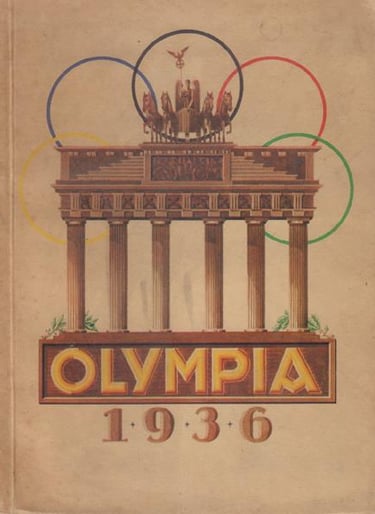
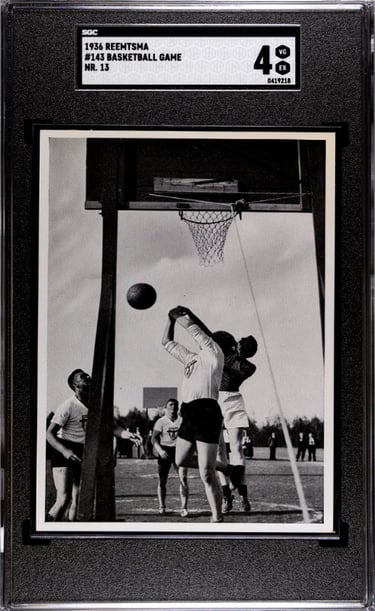
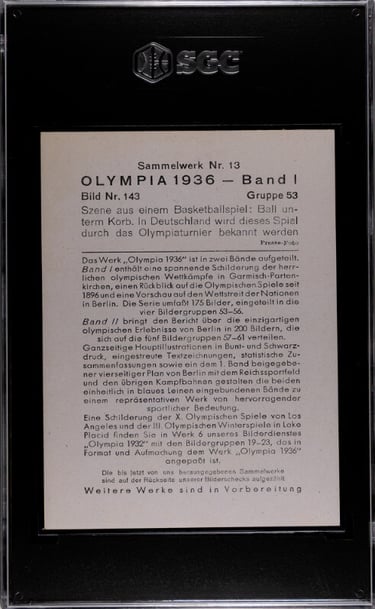
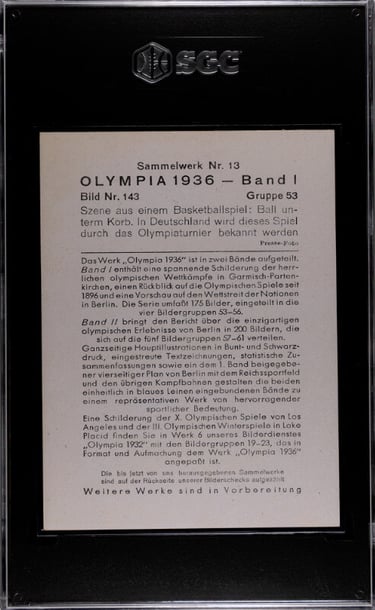
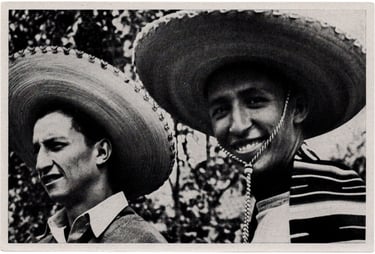
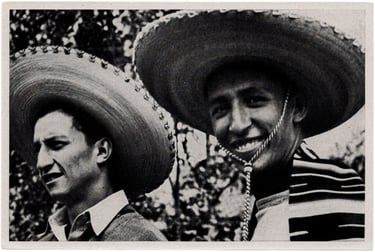
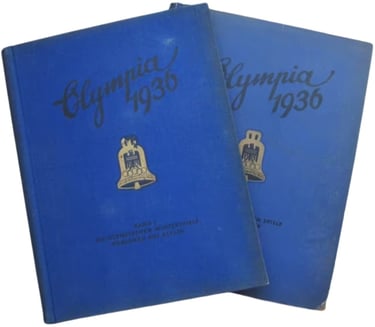
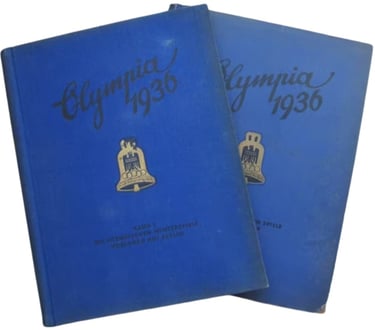
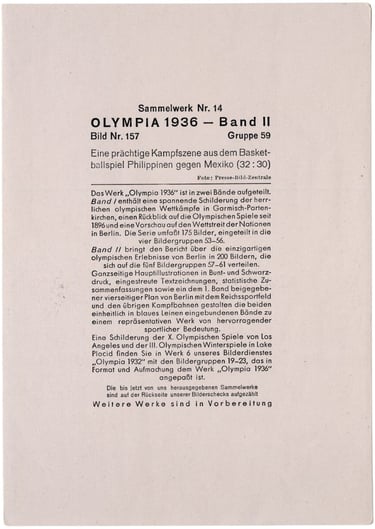
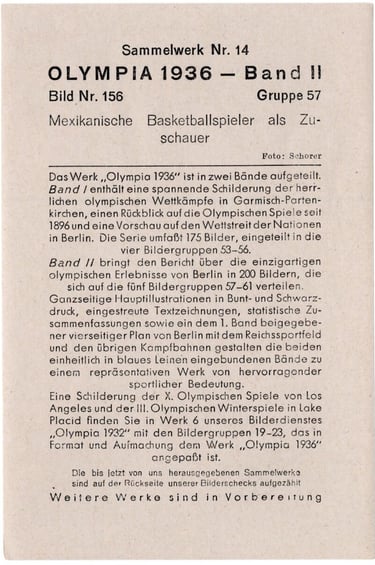
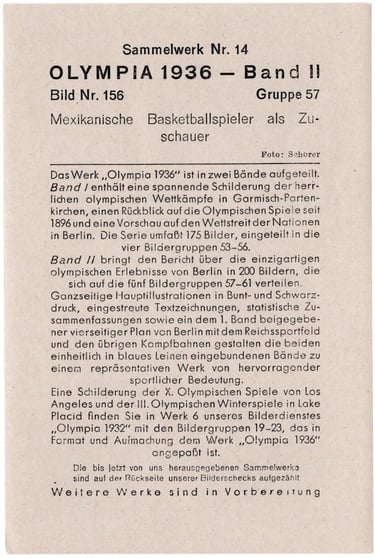
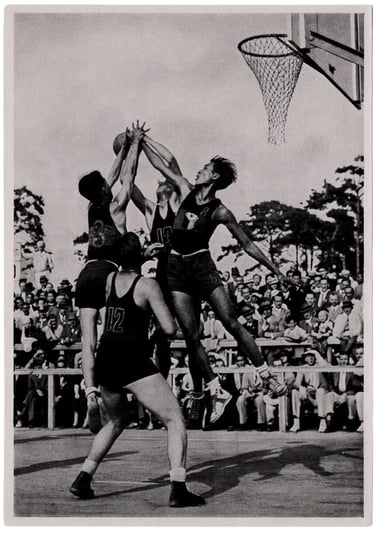
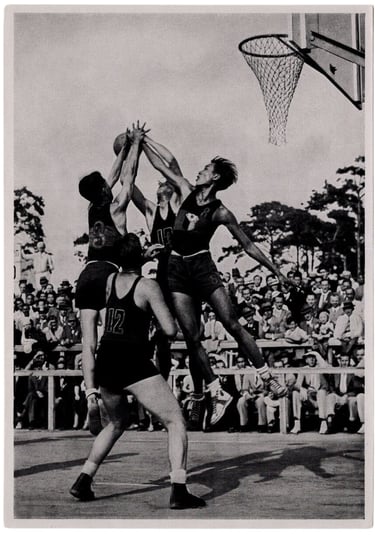
REEMSTMA SAMMELWERK BAND 1&2 NR.13&14 CARDS #143 #156 #157 (GERMANY)
Reemstma released 2 sets (Band 1&2) of cards that were made to adhere to an accompanying album of the 1936 Olympic games. There were a total of 3 basketball cards in the 2 sets, with number #157 (Philippines vs Mexico) being larger than the other 2. These cards seem to be the most common of the 1936 German Olympic cards.
Measurements: 3.125" x 4.75" & 4.75" x 6.75"
1936
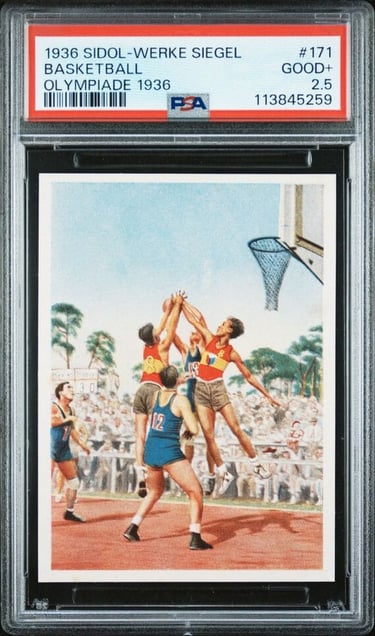
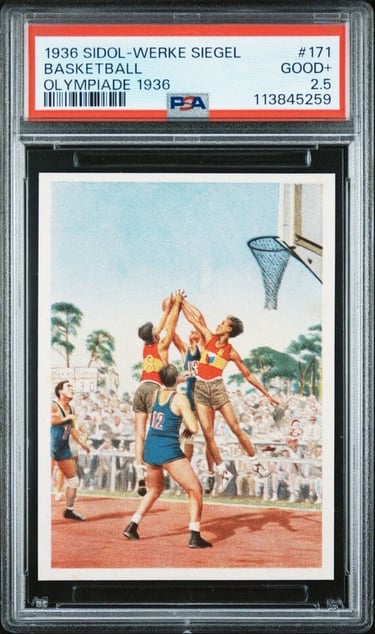
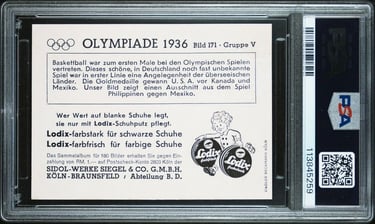
SIDOL-WERKE SIEGEL & CO, OLYMPIADE 1936, BILD 171, GRUPPE V, BASKETTBALL (GERMANY)
Sidol Werke was a German shoe polish company that released a 1936 Olympics set of 180 cards. This is the only basketball card and features the photo of The Philippines vs Mexico that was used in other releases as well. This set was in color, while most German releases were black and white.
Measurements: 2.5" x 3.5"
1936
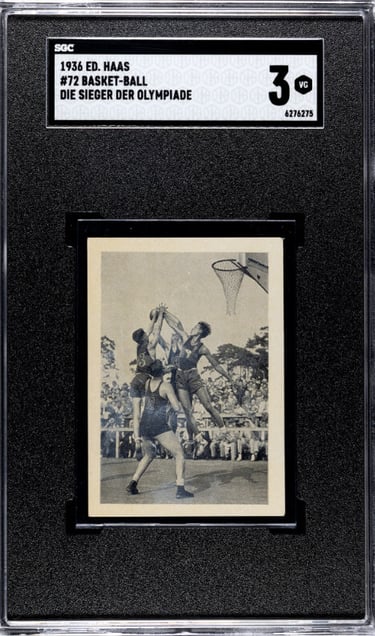
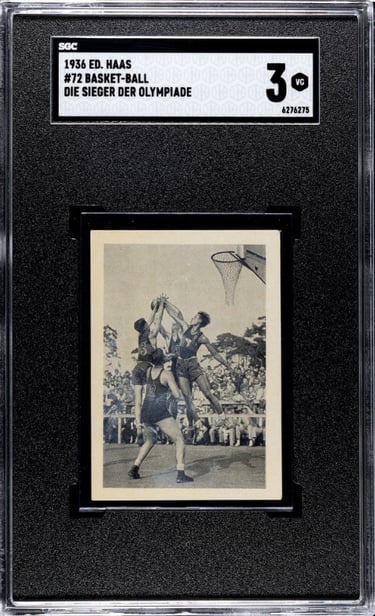
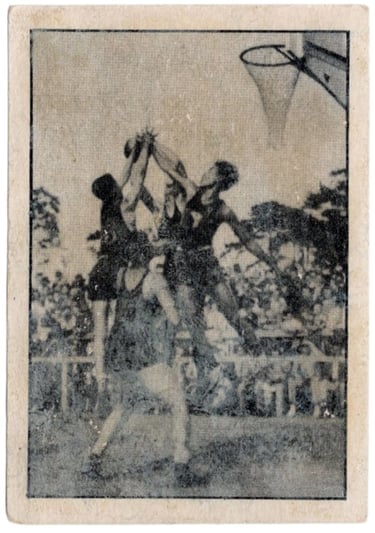
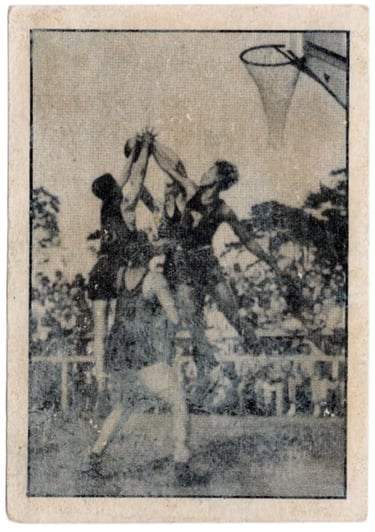
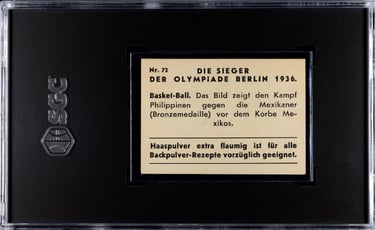
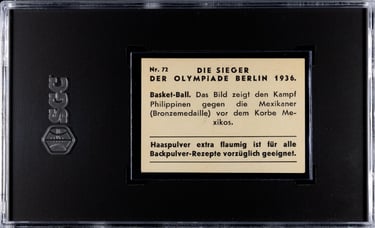
ED. HAAS DIE SIEGER DER OYLMPIADE BERLIN, NR. 72, BASKET-BALL (GERMANY)
Ed. Haas was a baking powder company in Germany that produced these cards for the 1936 Olympics in Berlin. This was the only basketball card in the set of 128 cards and features the photo of The Philippines vs Mexico that was also used in other card releases. The Haas cards are one of the more rare German sets from 1936 and are smaller than most others. There is also a black bordered variation of this, labeled #62, which is much rarer then #72.
Measurements: 1.625" x 2.375"
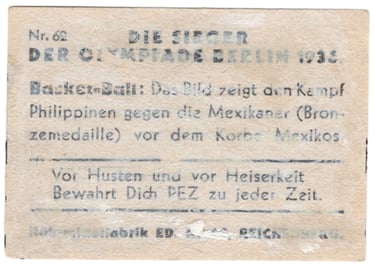
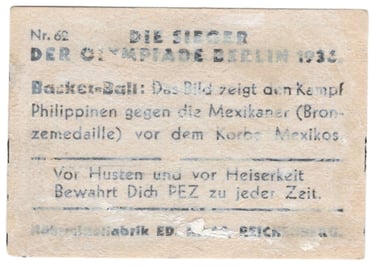
ED. HAAS DIE SIEGER DER OYLMPIADE BERLIN, NR. 62, BASKET-BALL (GERMANY)
1936
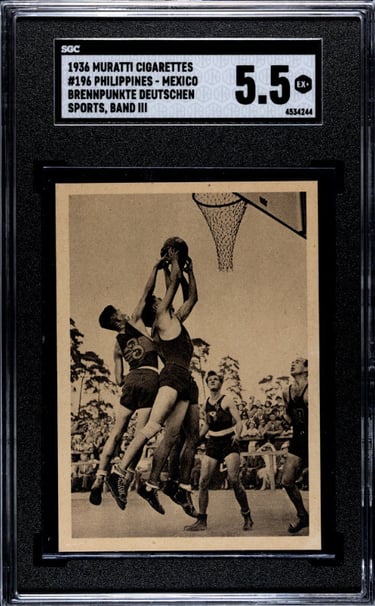
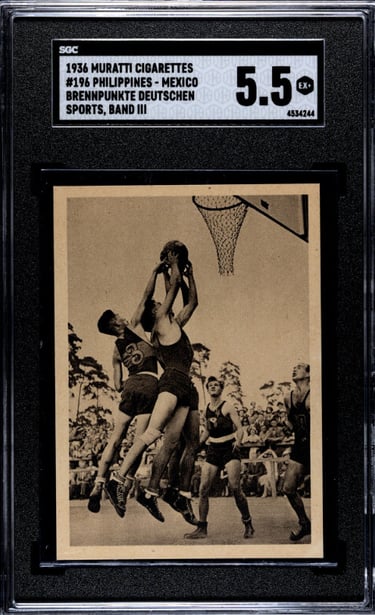
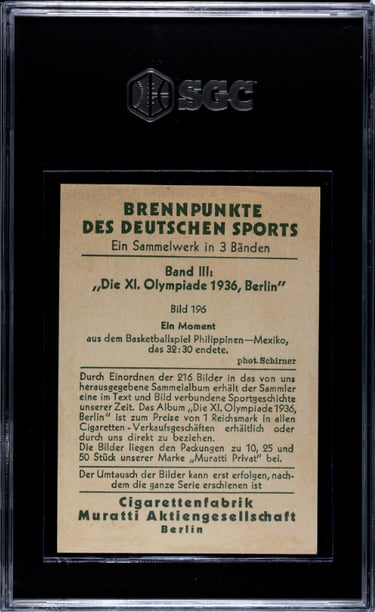
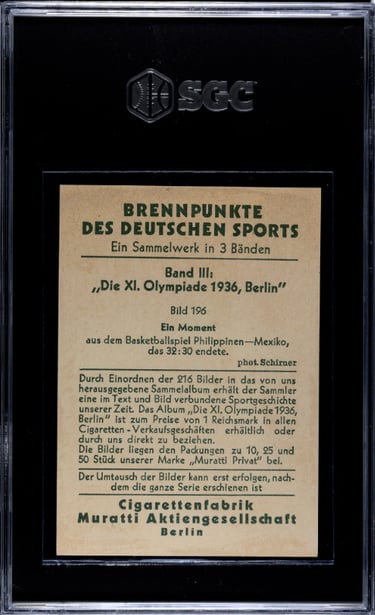
MURATTI CIGARETTES BRENNPUKTE DES DEUTSCHEN SPORTS BAND III #196 PHILIPPINES-MEXICO (GERMANY)
This set was released by Muratti cigarettes of Berlin and features sports and athletes of the 1936 Berlin Olympic games. There were over 700 cards in 3 subsets, with 2 basketball cards, one in Band II (released in 1935) and this far more rare Band III card featuring an image from the Olympic match between the Philippines and Mexico.
Measurements: 2.5" x 3.5"
1936
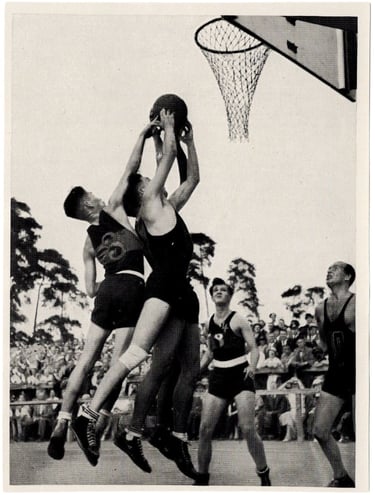
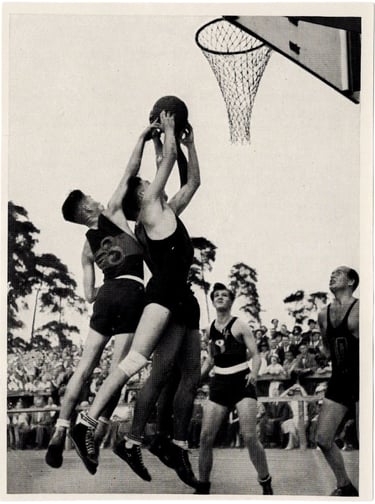
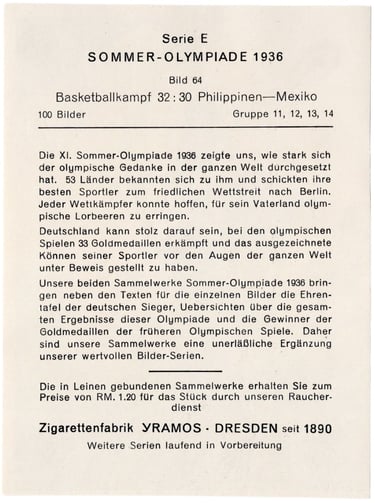
YRAMOS DRESDEN SOMMER-OLYMPIADE SERIE E #64 PHILLIPINES VS MEXICO (GERMANY)
Yramos cigarettes was another issuer of 1936 Olympics cards and released two different series (E&F) dedicated to the summer Olympic games. This card (#64 in Series E) is the only card featuring basketball in either series and features a game between the Philippines and Mexico. This rare card uses the same image that is used on the even rarer 1936 Muratti cigarettes card.
Measurements: 3.5" x 4.75"
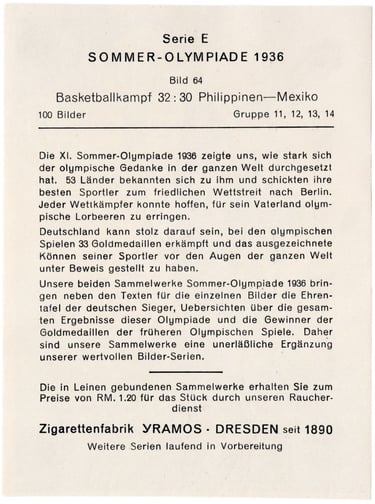
1936
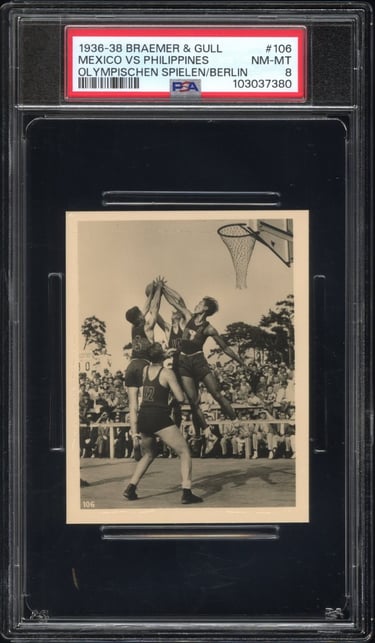
BRAEMER & GULL OLYMPISCHEN SPIELEN #106 MEXICO VS PHILIPPINES (GERMANY)
Braemer & Gull was a press photo company and their 1936 Olympic set were numbered photo cards with blank backs. There was no accompanying album for the cards and they were released in packs. The set consisted of 204 cards, with this being the only basketball card and it featured the often used iconic image from the Philippines vs Mexico match.
Measurements: 1.75" x 2.625"
1936
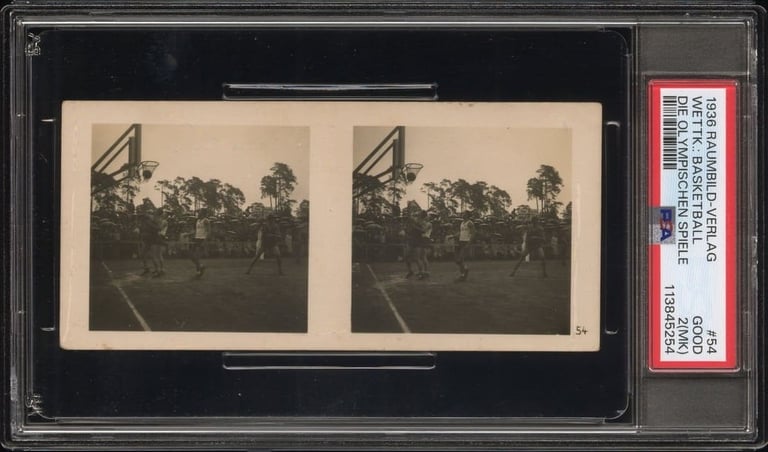
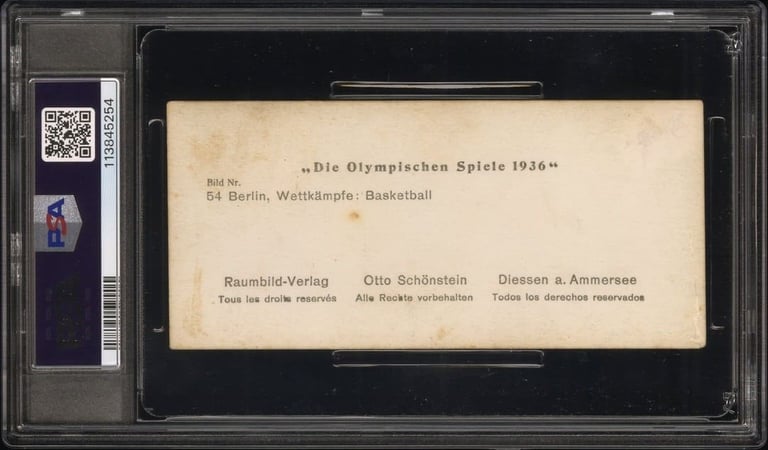
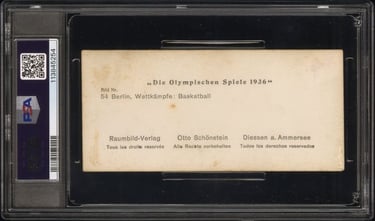
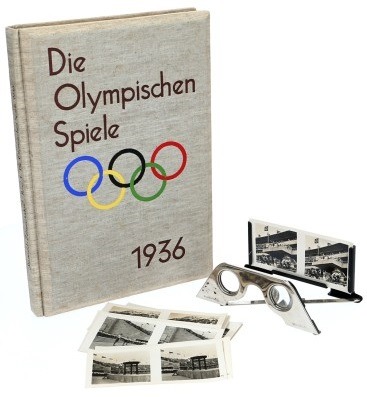
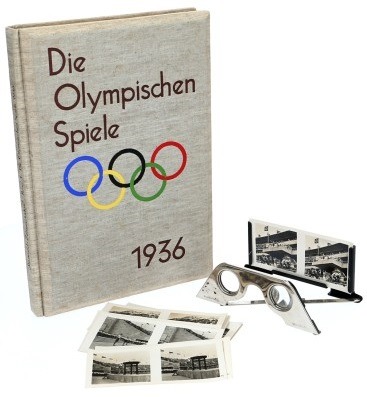
DIE OLYMPISCHEN SPIELE STEREOSCOPIC CARD #54 BASKETBALL (GERMANY)
The Die Olympischen Spiele cards were stereoscopic cards had images meant to be used with a stereo viewer, which was included in the accompanying album. The cards featured different sports from the 1936 Olympics, one of which was a basketball card, #54, which features a scene from the Poland vs. Mexico game in which they were playing for the bronze medal. The cards came in a numbered set of 100 and the photographs were taken by Heinrich Hoffmann, the official photographer of the Adolph Hitler and the Nazi party. Hoffman was arrested by the United States army in 1945 and was sentenced to prison for war profiteering.
Measurements: 2.25" x 5"
1936
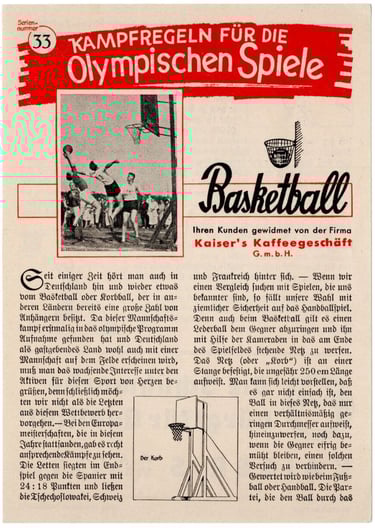
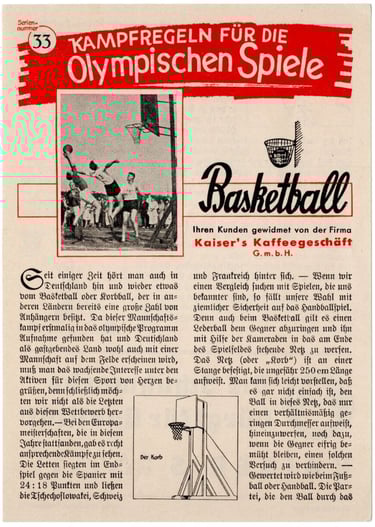
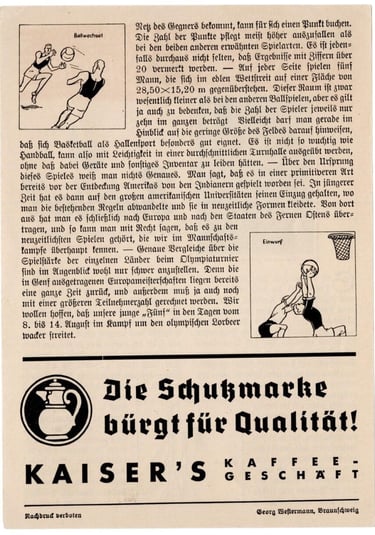
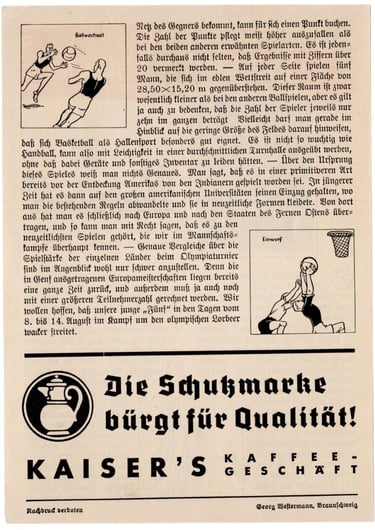
KAISER'S COFFEE KAMPFREGELN FUR DIE OLYMPISCHEN SPIELE (RULES OF COMBAT FOR THE OLYMPIC GAMES) #33 BASKETBALL (GERMANY)
Beginning in November of 1935, 2 of these collective cards were issued weekly featuring descriptions and rules for different Olympic sports and events leading up until the 1936 Olympic games in Berlin. The complete set consisted of 50 cards.
Measurements: 4.125" x 5.75"
1936
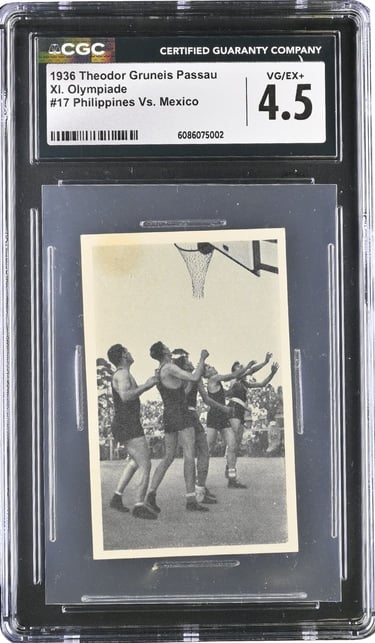
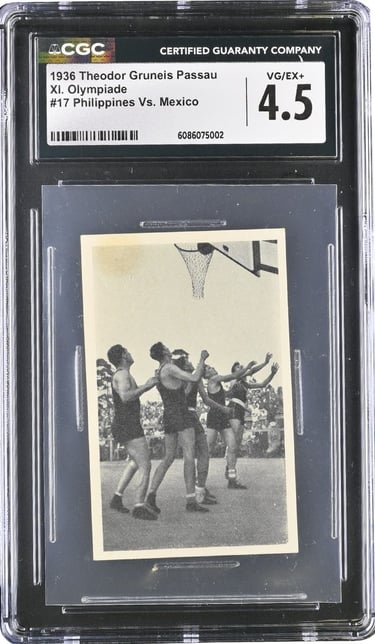
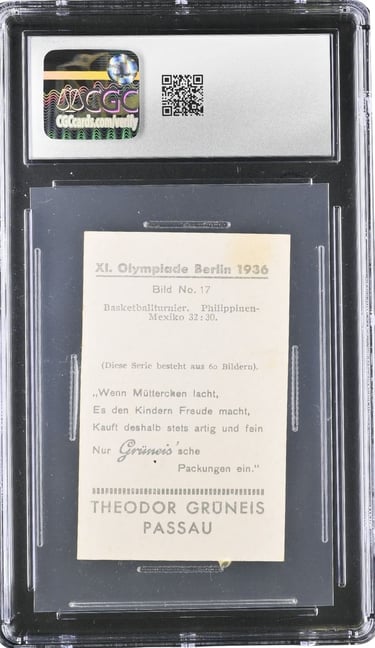
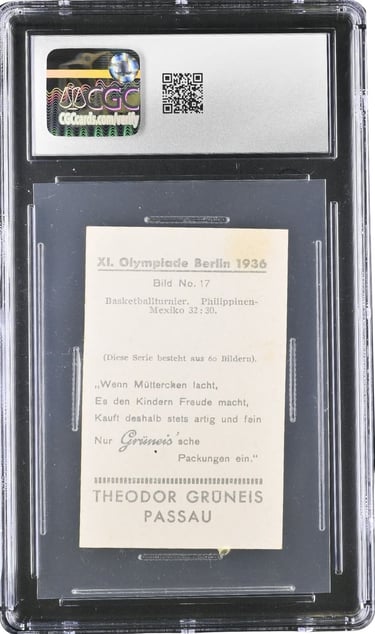
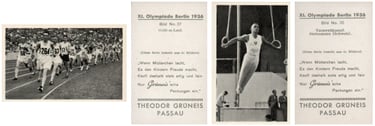
THEODOR GRÜNEIS PASSAU XI. OLYMPIADE BERLIN 1936, BILD NO. 17, BASKETBALLTURNIER, PHILLIPINEN VS MEXIKO (GERMANY)
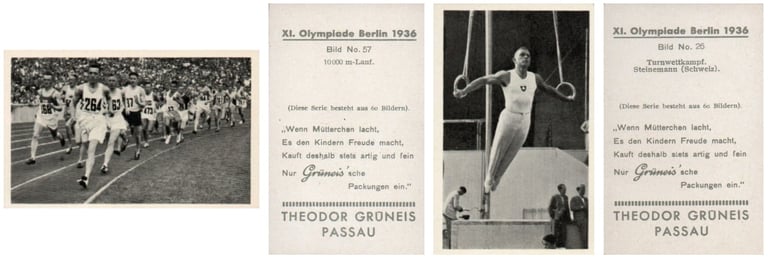
I cannot find any information online for this set. I've inquired with other collector's and some have heard of it but never actually seen them before, it is considered to be the rarest of the 1936 German Olympics sports card releases. I've included an image of the only other card examples I could find from the set. These cards were released by Theodor Grüneis Tobacco of Passau, Germany in 1936. Like many German Berlin Olympic sets of that year, I assume the set consisted of a variety of athletes and games. This basketball card is number 17 in a series of 60 cards and features the 2nd round match between the Philippines vs Mexico on August 9th, 1936, in which the Philippines won 32-30.
Measurements: 1.75" x 2.625"
1936
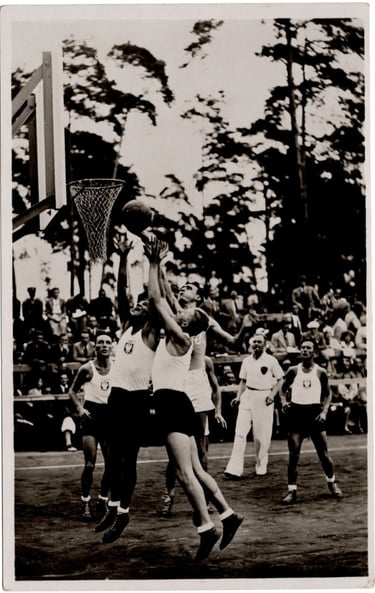
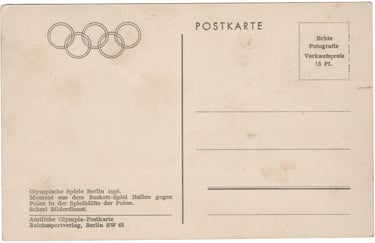
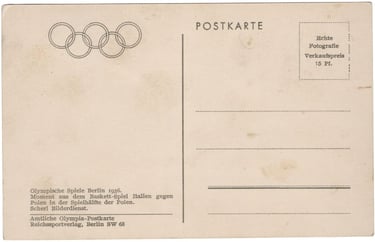
OFFICIAL OLYMPIC PHOTO POSTCARD ISSUED BY REICHSSPORTVERLAG, ITALY VS POLAND BASKETBALL MATCH
This is an unused real photo postcard from the 1936 Berlin Olympics. It features a moment from a match between Italy and Poland. It is marked “Official Olympic Postcard” by Reichssportverlag (Reich Sports Publishing HouseI in Berlin. The publishing house was founded during the Nazi era on the occasion of the 1936 Olympic Games in Berlin. It published numerous sports books and sports magazines, including the Olympia Zeitung, the official newspaper of the Olympic games.
Measurements: 3.5” 5.5"
1936
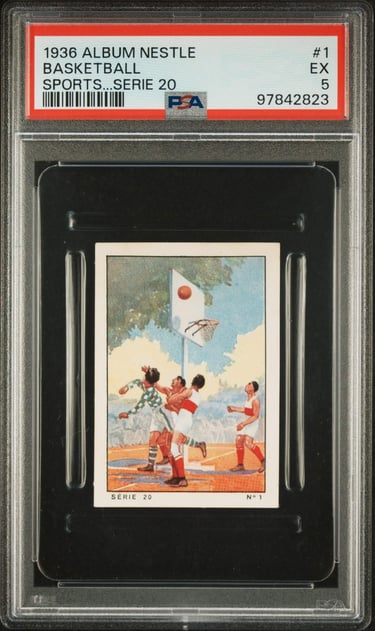
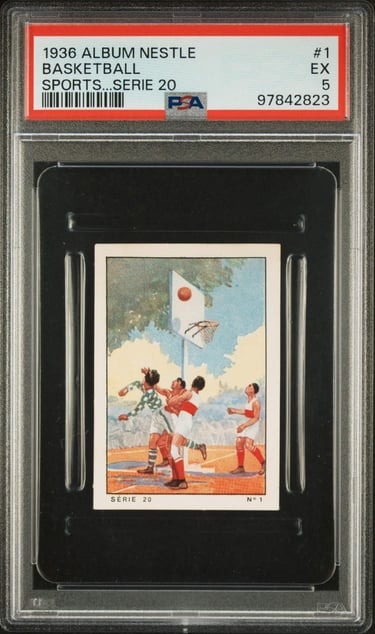
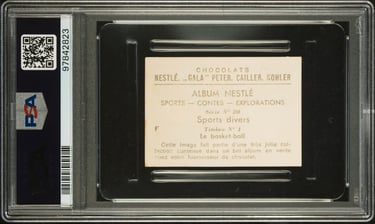
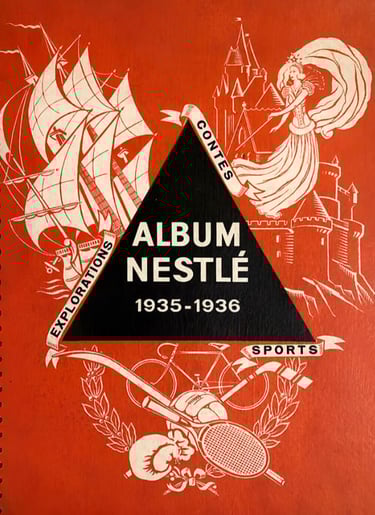
NESTLE SPORTS SERIE 20 #1 BASKETBALL (FRANCE)
This card was the only basketball card in a series of sports cards found in packs of Nestle's chocolates. The cards were made to be glued to an accompanying album, so finding one without residue is tough.
Measurements: 1.5" x 2.25"
1936
BIHAR FOR DUBEK CIGARETTES LTD. MISHMAR VE'SPORT, SPORTS GAMES, BASKETBALL CARDS (ISRAEL/PALESTINE)
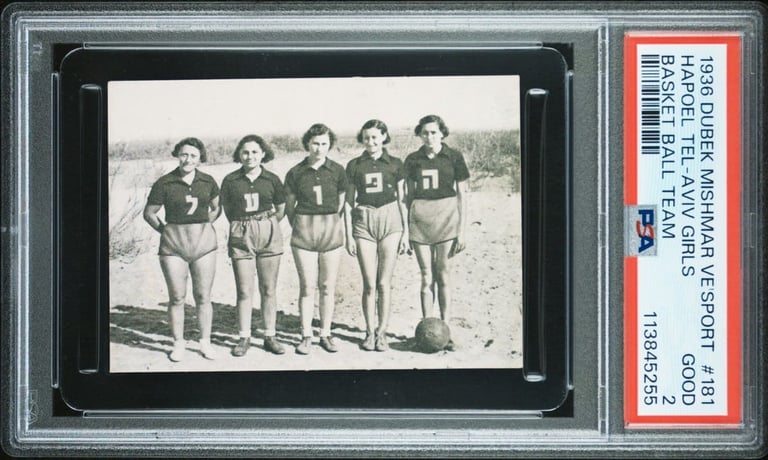
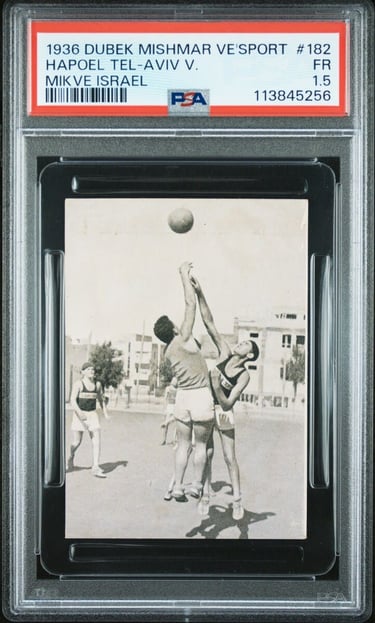
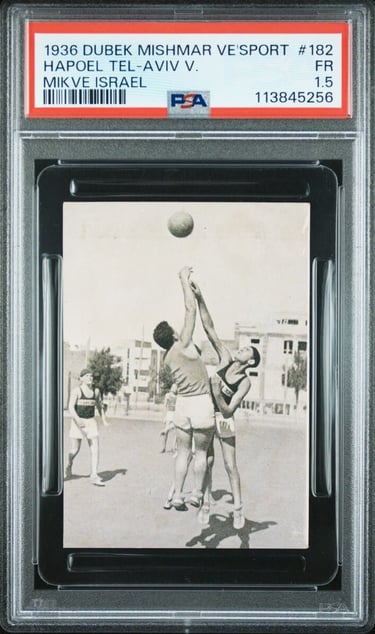
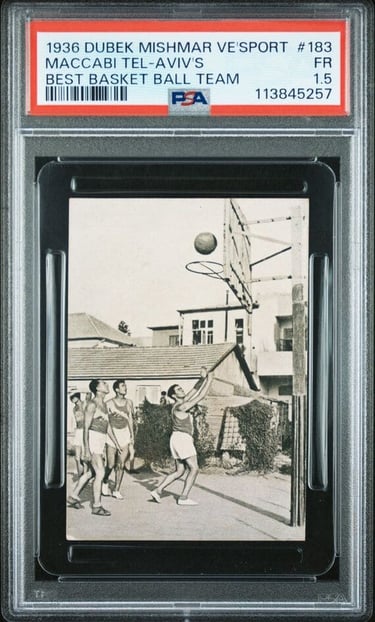
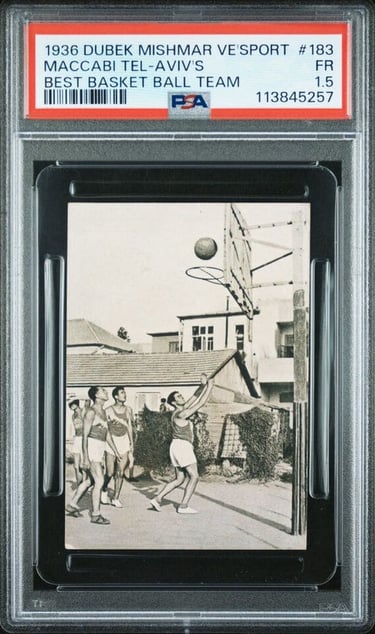
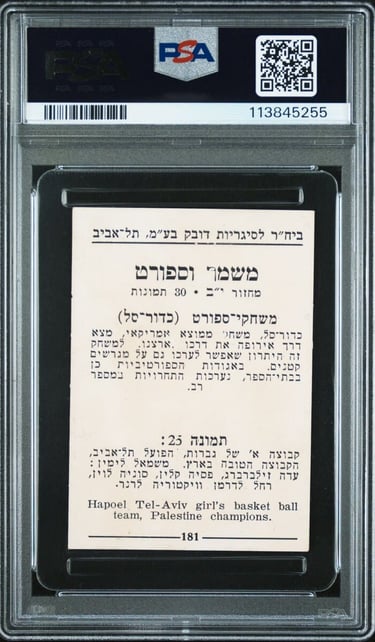
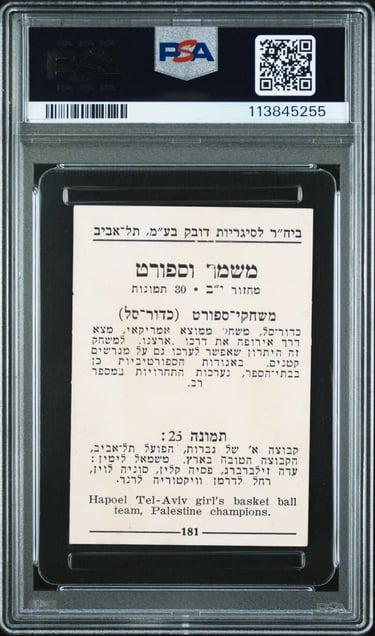
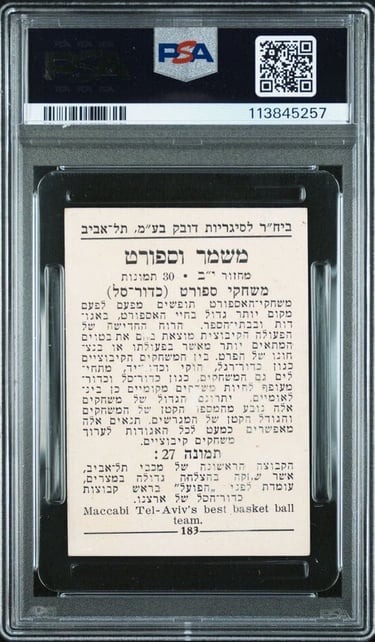
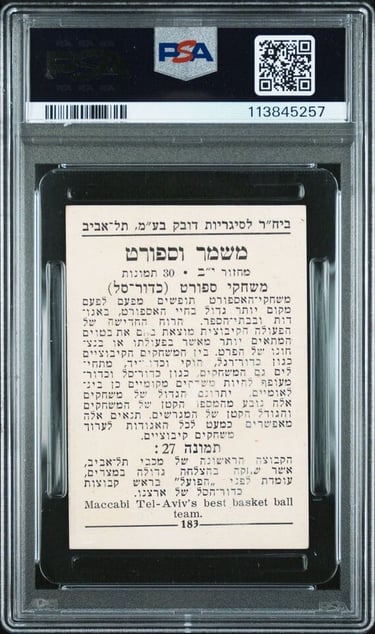
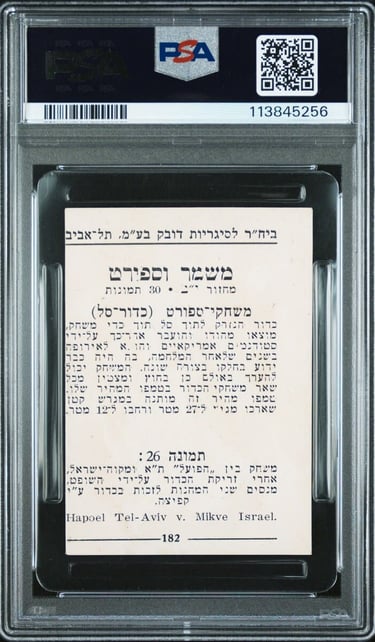
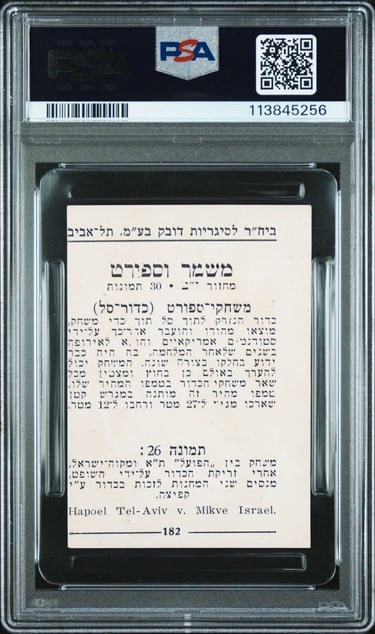
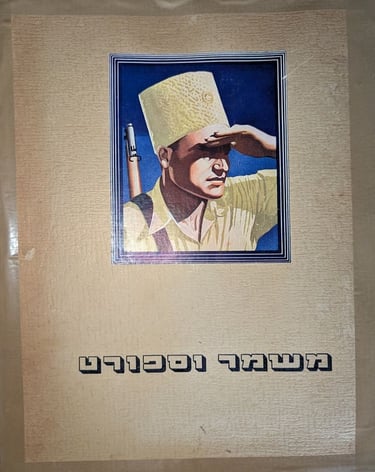
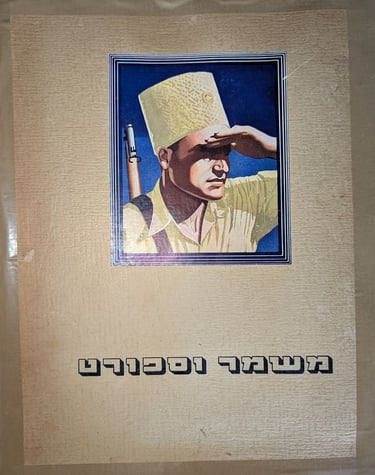
The Mishmar Ve’Sport (Defense, Watch & Sport) album was a combination of Eretz Israel Defense & Sports cards highlighting the physical strength and independence of the Jewish people. Dubek Ltd. was founded in 1935 and is the only Israeli cigarette company that manufactures, imports and distributes tobacco products throughout Israel and Palestine. The entire region at the time was known as Palestine under British mandate, as the independent state of Israel wasn’t created until 1948. The set consisted of 216 cards, half of which featuring the military, the other half featuring various sports. There was a total of 3 basketball cards in the set, 181 – Hapoel Tel-Aviv girl’s basket ball team, Paelstine champions, 182 – Hapoel Tel Aviv vs. Mikve Israel & 183 – Maccabi Tel-Aviv’s best basket ball team. Measurements: 2” x 2.875”
1936
CHOCOLAT SAINTOIN ORLÉANS, BASKET-BALL NO. 49 (FRANCE)
There is very little information available on this set. I do know that the set included a variety of other sports including baseball, hockey, boxing, tennis, etc. I have not seen a card numbered higher than 50, so perhaps that's the total amount of cards included in the set. SGC did not assign a year to this release. My research found that the photo used for the baseball card was from 1936 and it is highly likely this photograph used on the basketball card was from a match in early 1938. My best guess is that this set was released in 1938-39.
Measurements: 2.375" x 3.75"
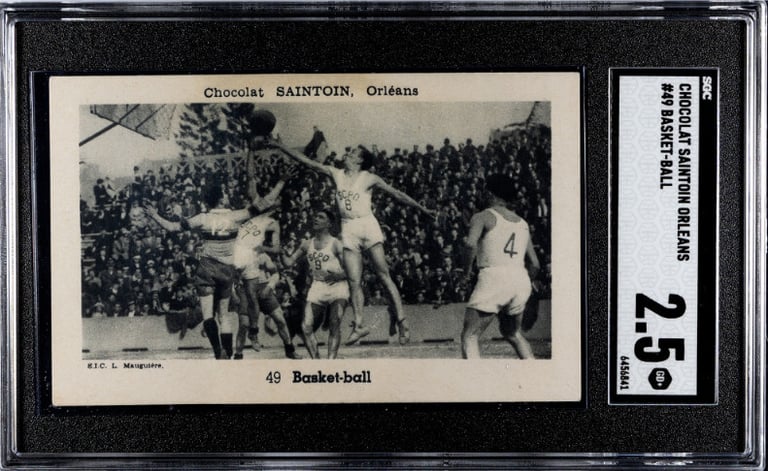
late 1930s
BASKET-BALL SCHOOL CARD (MAKER UNKNOWN) (FRANCE)
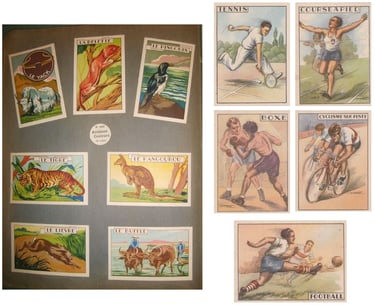
I have seen this card listed as a Café Gilberts release from the late 1940s, although I’ve been told that this is likely incorrect from serious French collectors. I have examples of similar looking cards, that use a comparable font and design, featuring animals in a printer’s representative binder (sample catalog), that are labeled No. 2229 Animaux Couleurs and most likely produced by Bauvin Paris. These cards were released in multiple sets and albums and were distributed at French schools as a reward for good grades. The animal series was released around 1930, but I believe this particular sports set is from the late 1930s. My opinion is the illustration on the basketball card was replicated from the same photograph used on a late 1930s Chocolat Saintoin basketball card, a photo which has been confirmed is from a game in early 1938. The comparison of the two images here shows the subjects with the same features and in the exact same positions. I estimate that this card was a 1938-40 release, before the war broke out in France (May 1940) and that it was most likely a school card issue. There is a possibility that this was released closer to 1950, when the French began issuing cards and albums again (after the war), but it doesn’t seem to resemble any other cards released during that period and it would be unusual to use a font, design, and image from 15-20 years prior.
Measurements: 2.25" x 3.00"
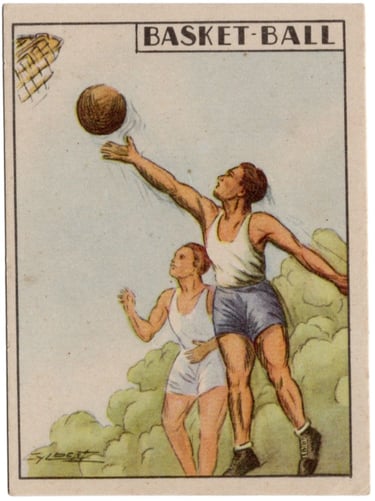
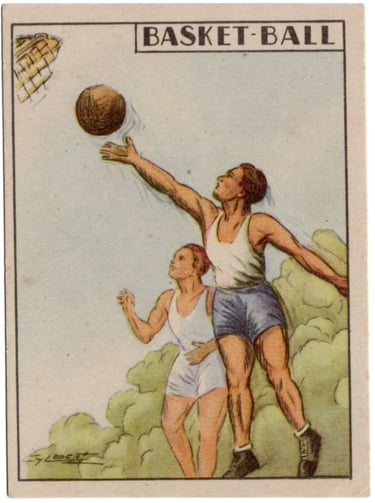
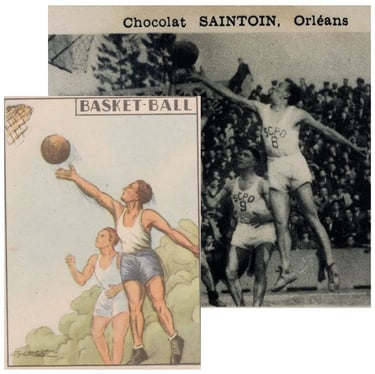
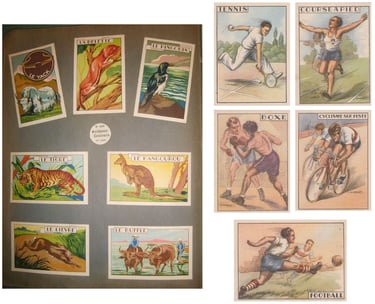
late 1930s
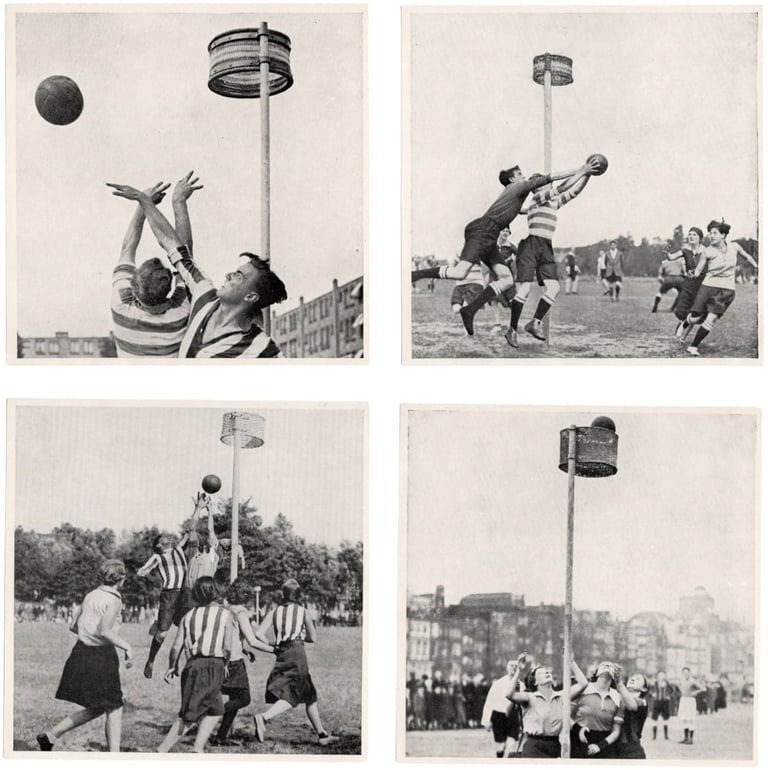
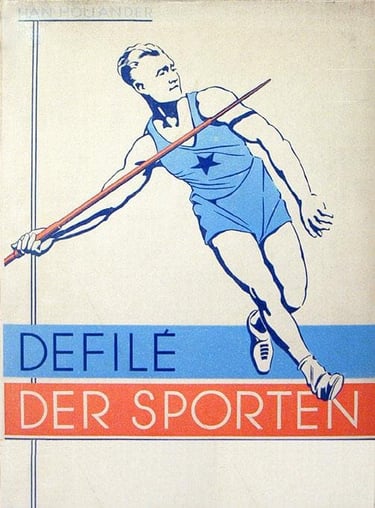
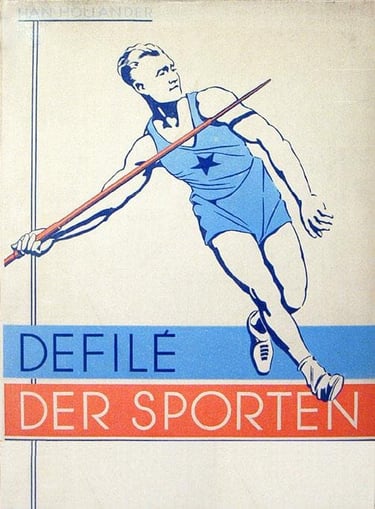
DELI-ATJEH DEFILÉ DER SPORTEN BY HAN HOLLANDER, KORFBALL CARDS (NETHERLANDS)
The cards in this set were commissioned by the Deli-Atjeh Trading Company and were meant to be adhered to the album Defilé der sporten, by Han Hollander of Sports Parade. Han Hollander was a popular radio sports reporter. There were 190 cards in the set and they were released in 2 different sizes. 17 different sports were included in the set, including Korfball (Netball), although the exact number of Korfball cards is unknown.
Measurements: 3.875” x 3.875”
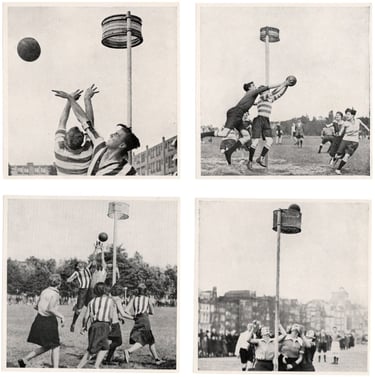
1938
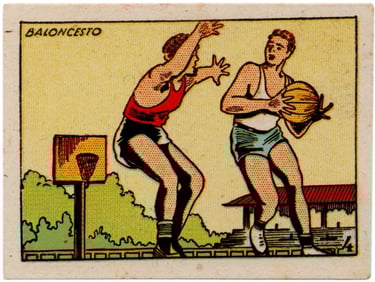
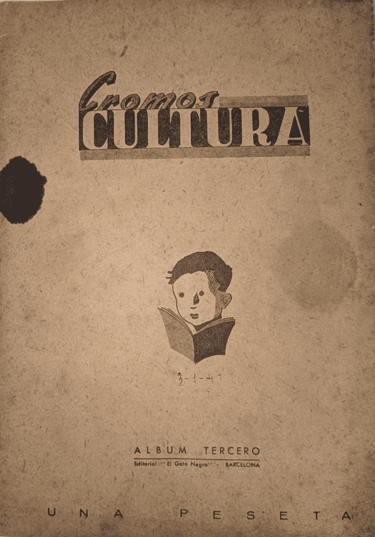
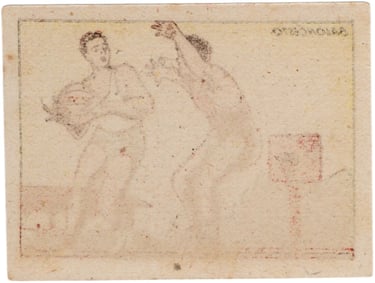
EL GATO NEGRO, CROMOS CULTURAS, ALBUM TERCERO BALONCESTO CARD #4 (SPAIN)
El Gato Negro (and later Bruguera) released the Cromos Cultura album and cards between 1939 and 1942. The albums featured a variety of subjects and sports. The third album (Tercero), had the only basketball card in the entire series (Baloncesto #4). These are typically found adhered to the album, so finding one with a good back is difficult.
Measurements: 2.250" x 1.75"
1939
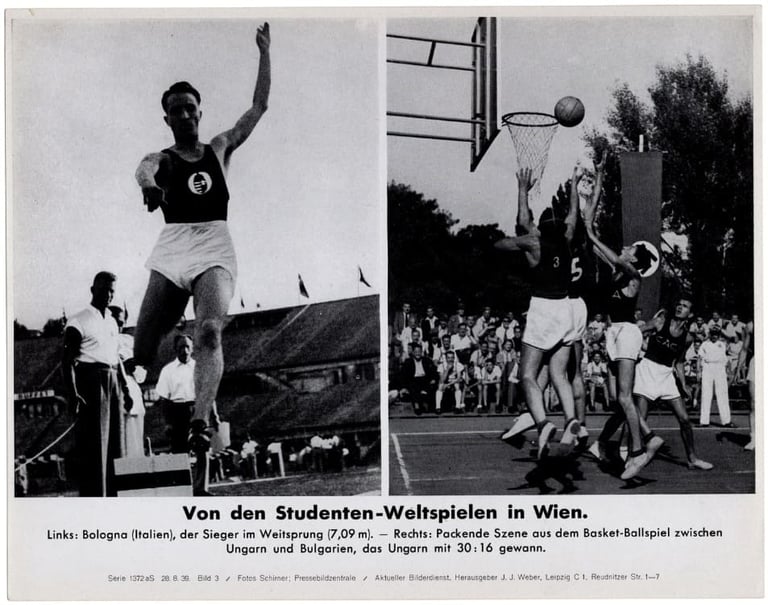
AKTUELLER BILDERDIENST BASKETBALL PHOTO CARD SERIE 1972AS (GERMANY)
These large press photo cards were released as a series by Aktueller Bilderdienst and published by J.J. Weber. They were published in the late 1930s in Germany and featured news and sports images. This particular photo card is labled Series 1372aS Bild 3 from August 28th, 1939. The right photo features a basketball match between Hungary and Bulgaria at the Studenten-Weltspiele (college world games) in Austria, which Hungary won 30 to 16. The reverse is blank. Many countries boycotted these games because Vienna was part of Nazi Germany at the time.
Measurements: 9.125” x 7.25”
1939